On a wet Tuesday night in a parish hall, eight volunteers are deciding whether to spend $80,000 on a leaky roof or keep funding a youth worker. This is vestry – the small elected group that quietly determines how an Anglican church will survive and grow.
I’m starting a series on the anatomy of Anglican governance to help demystify some of the roles that are absolutely vital to the running of our churches, but often hidden beneath layers of jargon. I think the term “anatomy” works well as we investigate the inner workings of the body of Christ.
There are different types of leadership in a church:
While there’s some overlap, the first is primarily the role of the vicar, the second is the role of vestry, and the third is the role of staff and volunteers involved in parish management.
In this series, I’ll unpack a number of particular roles, but to begin with, I’ll start with the main group: vestry.
Vestry is the elected governing body of members responsible for the big decisions in a parish. The word “vestry” actually comes from the room where vestments are kept in a church (tracing back to the Latin vestiarium: a wardrobe). This room would often serve as a meeting room for transactions of parish business, which eventually led to the word “vestry” referring to the governing body itself.
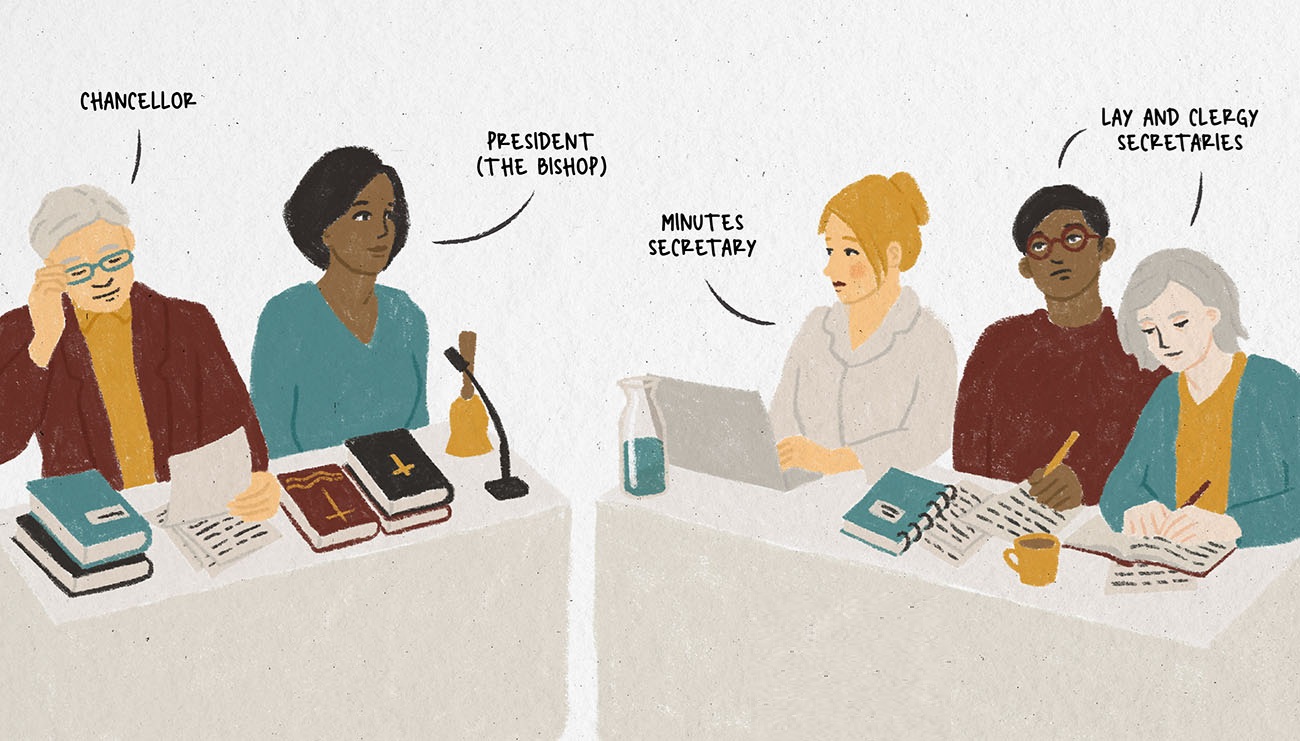
Vestry is made up of the vicar, two church wardens – the vicar’s warden and the people’s warden – two or three synod representatives, and three to ten elected members. Those numbers vary across different dioceses. Each person has particular responsibilities, which I’ll explain in future articles.
There might also be a health and safety advocate, a treasurer, a secretary and a youth synod representative. Those people don’t have to be on vestry (and they will have speaking but not voting rights unless they've already been elected onto vestry), but they’re important for the functioning of the parish, so I’ll be covering them in this series too.
If you’re regularly involved in your local parish and have an interest in how things run, you may be eligible to – and maybe should?! – put yourself forward to be nominated. Names are put forward for nomination, each one seconded by someone else on the parish role, then elected by parishioners at the AGM.
Vestry usually meets monthly. The agenda is sent out in advance so members can get their heads around the items of business. Typically the vicar will lead the meeting, and someone will be appointed to write the minutes. Often vestry meetings will include supper and a short devotion. After the meeting, members receive a copy of the minutes.
According to our statutes, the primary duties of vestry are:
Most items on vestry agenda will fall under those categories. It’s a broad scope of responsibilities, which could range from choosing curtains for the crèche and colours for the parish website to reviewing property insurance and renewing ministry licences.
Someone with a background in business will offer good input on finance decisions. A construction worker might have ideas on how to renovate a church building to suit the needs of the parish. A primary school teacher may give suggestions on how to make the services more interactive for children.
And, as my mother says, “every vestry needs a Nancy”. Nancy brings supper with multiple containers of food. “If Nancy’s away, our numbers halve, and we have to make do with packet biscuits.”
If you’re interested in church leadership – and there’s a good chance you are if you’ve made it to the end of this article – you might want to look into joining vestry! We’re entering AGM season now, which is when most vestry members are elected for the year.
Talk to your vicar about it and help shape the future of your church.
1 A Guide for Vestries and Wardens, Nelson Anglican Diocese, February 2022.
2 Parishes Statute 2006, Nelson Anglican Diocese, September 2024.
Check out other articles in the
Anglican Anatomy
series below.
More articles in the
Anglican Anatomy
series are to come.
We have invited these writers to share their experiences, ideas and opinions in the hope that these will provoke thought, challenge you to go deeper and inspire you to put your faith into action. These articles should not be taken as the official view of the Nelson Diocese on any particular matter.
On a wet Tuesday night in a parish hall, eight volunteers are deciding whether to spend $80,000 on a leaky roof or keep funding a youth worker. This is vestry – the small elected group that quietly determines how an Anglican church will survive and grow.
I’m starting a series on the anatomy of Anglican governance to help demystify some of the roles that are absolutely vital to the running of our churches, but often hidden beneath layers of jargon. I think the term “anatomy” works well as we investigate the inner workings of the body of Christ.
There are different types of leadership in a church:
While there’s some overlap, the first is primarily the role of the vicar, the second is the role of vestry, and the third is the role of staff and volunteers involved in parish management.
In this series, I’ll unpack a number of particular roles, but to begin with, I’ll start with the main group: vestry.
Vestry is the elected governing body of members responsible for the big decisions in a parish. The word “vestry” actually comes from the room where vestments are kept in a church (tracing back to the Latin vestiarium: a wardrobe). This room would often serve as a meeting room for transactions of parish business, which eventually led to the word “vestry” referring to the governing body itself.
Vestry is made up of the vicar, two church wardens – the vicar’s warden and the people’s warden – two or three synod representatives, and three to ten elected members. Those numbers vary across different dioceses. Each person has particular responsibilities, which I’ll explain in future articles.
There might also be a health and safety advocate, a treasurer, a secretary and a youth synod representative. Those people don’t have to be on vestry (and they will have speaking but not voting rights unless they've already been elected onto vestry), but they’re important for the functioning of the parish, so I’ll be covering them in this series too.
If you’re regularly involved in your local parish and have an interest in how things run, you may be eligible to – and maybe should?! – put yourself forward to be nominated. Names are put forward for nomination, each one seconded by someone else on the parish role, then elected by parishioners at the AGM.
Vestry usually meets monthly. The agenda is sent out in advance so members can get their heads around the items of business. Typically the vicar will lead the meeting, and someone will be appointed to write the minutes. Often vestry meetings will include supper and a short devotion. After the meeting, members receive a copy of the minutes.
According to our statutes, the primary duties of vestry are:
Most items on vestry agenda will fall under those categories. It’s a broad scope of responsibilities, which could range from choosing curtains for the crèche and colours for the parish website to reviewing property insurance and renewing ministry licences.
Someone with a background in business will offer good input on finance decisions. A construction worker might have ideas on how to renovate a church building to suit the needs of the parish. A primary school teacher may give suggestions on how to make the services more interactive for children.
And, as my mother says, “every vestry needs a Nancy”. Nancy brings supper with multiple containers of food. “If Nancy’s away, our numbers halve, and we have to make do with packet biscuits.”
If you’re interested in church leadership – and there’s a good chance you are if you’ve made it to the end of this article – you might want to look into joining vestry! We’re entering AGM season now, which is when most vestry members are elected for the year.
Talk to your vicar about it and help shape the future of your church.
Check out other articles in the
Anglican Anatomy
series below.
More articles in the
Anglican Anatomy
series are to come.