“Often we focus on how we can serve God, and how we bring him with us wherever we go – and there's truth in that,” Daryl tells me. “But God is already working beyond us. He's involved even when we’re not there. So I ask, What is God’s invitation for me to join him today?”
That’s how Daryl lives – seeking to recognise God wherever he is, and joining in.
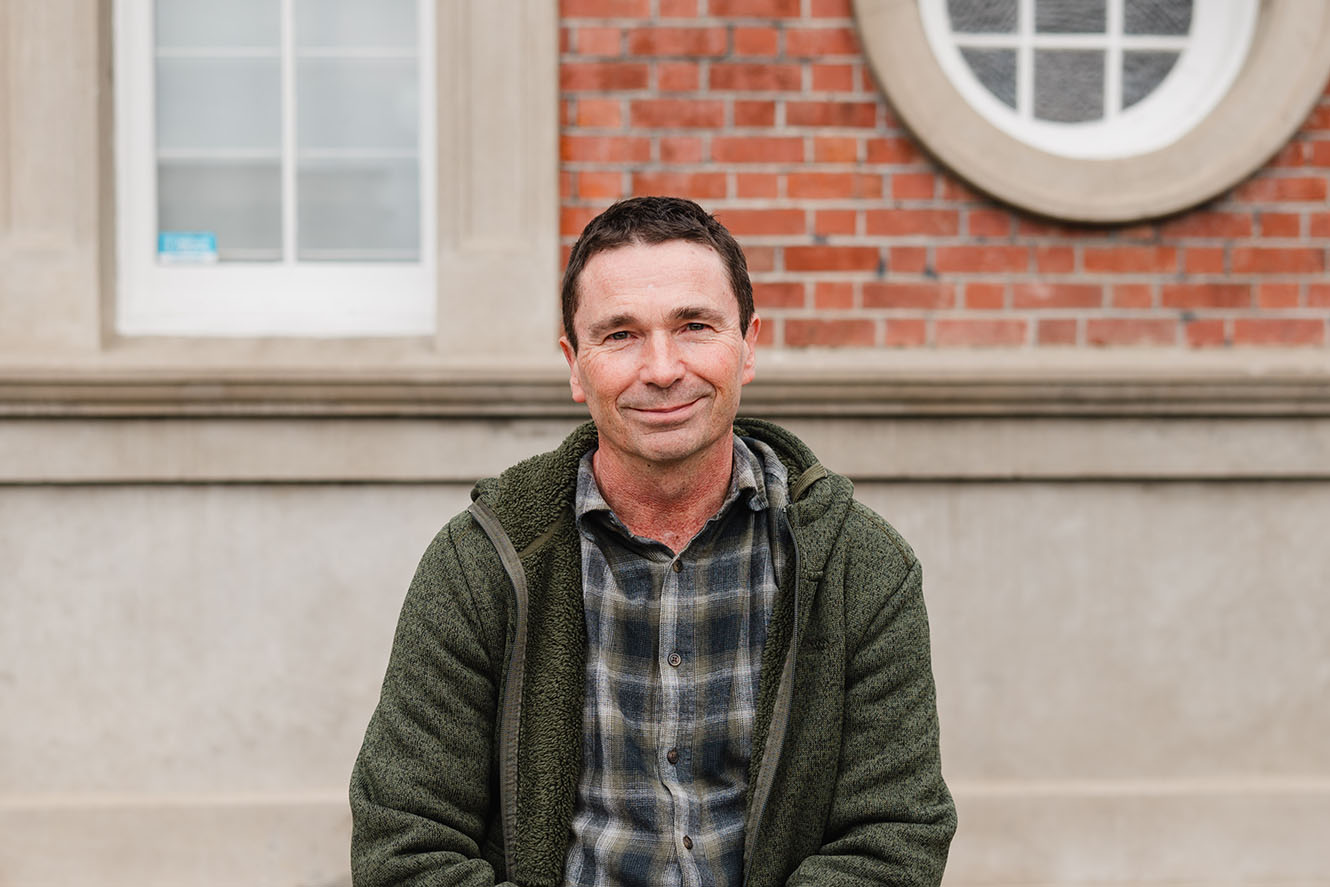
Daryl Collingwood is a primary school teacher three days a week. For the other two, he’s employed by the Motueka Anglican Parish as an elder care worker – though these days he goes by a title he’s grown into: “community pastor”.
Daryl agreed to meet me for coffee at Muses Café in Motueka. When I sat down with him, I immediately felt that I had his full attention. He speaks passionately, but with a gentle spirit and a constant smile. My first question was about what the role of a “community pastor” actually entails.
Daryl: I’m constantly developing and growing our care team. So instead of just me doing the visiting, connecting with people and assessing their needs, I have a team of about eight people who can help with this. We meet up once a term as a small group.
So if I’m visiting someone, I'm thinking, who could I connect this person with? Could it be someone from the care team? Or could it be someone in the wider church family? There’s a lot of networking and being the in-between person.
Initially my role began very much as a pastoral care within church, but my heart is missional. I love connecting outside the four walls of the church. I love connecting in the wider community. So I’ve been very intentional about connecting with some organisations like Age Concern. They may have a referral for me of someone that I might be able to help with. And vice versa, there are people that I meet that I might refer to Age Concern. Those connections have been really good, broadening our ability to gauge and address the needs in our wider community and show God’s love through practical support.
Daryl: For us, it’s not just about sitting down with an agenda about who’s in need and what we need to do. That’s part of it, but an equal priority is given to how we're growing in our walk with Jesus. It’s very much about how we see God in all aspects of our lives together rather than just meeting because we are part of a care team.
We ask questions like, What’s one struggle you're facing at the moment? or When have you sensed the presence of God around you this last month? Where have you not? And we pray together for one another. After that we talk about some of the current needs we have in front of us. We are a community rather than a committee.
My role is predominantly elderly, but that doesn't mean that they’re the only ones we're caring for – because the people in my team themselves are predominantly elderly, so it's empowering and equipping them to connect with younger generations, helping some of them refind their feet or refind their purpose. Helping them is elder care. It’s helping them grow or be pushed out of their comfort zone. I have a lovely older lady in her 80s who blesses people with hospitality. She'll often say, “I’m making some more meals if you ever need them, they’re sitting in my freezer.” So it was so natural for me recently to be able to say, “Hey, do you want to be part of this team? You are naturally engaged and caring for others already.”
We can often be confined to obligations or woulds and shoulds, and there may be times for that, but I believe the majority of our life we should be functioning in a place where our strengths are being used and that we are gaining energy rather than being sapped of energy because we're functioning according to how we're wired.
So if someone from the care team comes to me and says, “I think I've had enough here,” I’ll say, “Great, what's next for you?” They’ll be saying no to something so they can say yes to their next season.
Daryl: Yes – we’ve got a couple who have been part of our care team for a few years now. They were very open about their journey, saying they felt like their family has got to be their priority at the moment. And I said, “Great, that's how you're living kingdomly. You are blessing your family and you're prioritising them at this point.”
I’m very much about seeing everything as spiritual, our whole journey, rather than compartmentalising our spiritual life. It’s not This is what I do for God and This is what I do for my family and This is what I do for work.
One of the things that I'm championing at the moment within the church is how are we involved in community spaces outside our church? Are all our eggs in the come and see basket? Or are we also putting our eggs into the go and be basket? Wherever they are, whether it’s the badminton club, or the bowls, or a knitting group, or any other interest, I encourage people to be present in those places, because God’s already there and simply inviting us to join him there.
Daryl: I love cycling, it’s my passion and I need it for my own refreshment. But as well as that I get to build these cool friendships with people who might never step through the door of the church.
My family would be another spoke, I love to connect with my children and grandchildren.
Another area would be neighbours – I’m part of a little village community. I want to intentionally get to know each of my neighbours.
My garden is another spoke. Getting into the garden and growing stuff – I often sense God in the middle of all that.
School teaching is another spoke. I love just being present with the kids and with staff and finding opportunities to build relationships.
But I also see the ordinary everyday chores and mundane activities of life as spokes too. I think becoming aware of his presence in those spaces is just as important as other more obvious areas.
Daryl: Yes, and often we focus on how we can serve God, and how we bring him with us wherever we go – and there's truth in that. But God is already working beyond us. He's involved even when we’re not there. So I ask, What is God’s invitation for me to join him today?
Rather than going, I’ve got something I’m going to take to that person or group of people who need this, I go somewhere and pray, Help me to see you here today. I ask God to help me recognise his presence and his character in people, whether it’s someone who is following Jesus or not.
I try to live like that, to recognise that we all need each other, it’s not just about Christians having something that others need but everyone is actually created by God and has elements of his beauty and character and goodness. God what can I learn from this person? What is it that you're teaching me or wanting me to grow in because of this person here that you’ve brought me to? That's been really helpful for me in my own journey.
Check out other articles in the
series below.
More articles in the
series are to come.
We have invited these writers to share their experiences, ideas and opinions in the hope that these will provoke thought, challenge you to go deeper and inspire you to put your faith into action. These articles should not be taken as the official view of the Nelson Diocese on any particular matter.
“Often we focus on how we can serve God, and how we bring him with us wherever we go – and there's truth in that,” Daryl tells me. “But God is already working beyond us. He's involved even when we’re not there. So I ask, What is God’s invitation for me to join him today?”
That’s how Daryl lives – seeking to recognise God wherever he is, and joining in.
Daryl Collingwood is a primary school teacher three days a week. For the other two, he’s employed by the Motueka Anglican Parish as an elder care worker – though these days he goes by a title he’s grown into: “community pastor”.
Daryl agreed to meet me for coffee at Muses Café in Motueka. When I sat down with him, I immediately felt that I had his full attention. He speaks passionately, but with a gentle spirit and a constant smile. My first question was about what the role of a “community pastor” actually entails.
Daryl: I’m constantly developing and growing our care team. So instead of just me doing the visiting, connecting with people and assessing their needs, I have a team of about eight people who can help with this. We meet up once a term as a small group.
So if I’m visiting someone, I'm thinking, who could I connect this person with? Could it be someone from the care team? Or could it be someone in the wider church family? There’s a lot of networking and being the in-between person.
Initially my role began very much as a pastoral care within church, but my heart is missional. I love connecting outside the four walls of the church. I love connecting in the wider community. So I’ve been very intentional about connecting with some organisations like Age Concern. They may have a referral for me of someone that I might be able to help with. And vice versa, there are people that I meet that I might refer to Age Concern. Those connections have been really good, broadening our ability to gauge and address the needs in our wider community and show God’s love through practical support.
Daryl: For us, it’s not just about sitting down with an agenda about who’s in need and what we need to do. That’s part of it, but an equal priority is given to how we're growing in our walk with Jesus. It’s very much about how we see God in all aspects of our lives together rather than just meeting because we are part of a care team.
We ask questions like, What’s one struggle you're facing at the moment? or When have you sensed the presence of God around you this last month? Where have you not? And we pray together for one another. After that we talk about some of the current needs we have in front of us. We are a community rather than a committee.
My role is predominantly elderly, but that doesn't mean that they’re the only ones we're caring for – because the people in my team themselves are predominantly elderly, so it's empowering and equipping them to connect with younger generations, helping some of them refind their feet or refind their purpose. Helping them is elder care. It’s helping them grow or be pushed out of their comfort zone. I have a lovely older lady in her 80s who blesses people with hospitality. She'll often say, “I’m making some more meals if you ever need them, they’re sitting in my freezer.” So it was so natural for me recently to be able to say, “Hey, do you want to be part of this team? You are naturally engaged and caring for others already.”
We can often be confined to obligations or woulds and shoulds, and there may be times for that, but I believe the majority of our life we should be functioning in a place where our strengths are being used and that we are gaining energy rather than being sapped of energy because we're functioning according to how we're wired.
So if someone from the care team comes to me and says, “I think I've had enough here,” I’ll say, “Great, what's next for you?” They’ll be saying no to something so they can say yes to their next season.
Daryl: Yes – we’ve got a couple who have been part of our care team for a few years now. They were very open about their journey, saying they felt like their family has got to be their priority at the moment. And I said, “Great, that's how you're living kingdomly. You are blessing your family and you're prioritising them at this point.”
I’m very much about seeing everything as spiritual, our whole journey, rather than compartmentalising our spiritual life. It’s not This is what I do for God and This is what I do for my family and This is what I do for work.
One of the things that I'm championing at the moment within the church is how are we involved in community spaces outside our church? Are all our eggs in the come and see basket? Or are we also putting our eggs into the go and be basket? Wherever they are, whether it’s the badminton club, or the bowls, or a knitting group, or any other interest, I encourage people to be present in those places, because God’s already there and simply inviting us to join him there.
Daryl: I love cycling, it’s my passion and I need it for my own refreshment. But as well as that I get to build these cool friendships with people who might never step through the door of the church.
My family would be another spoke, I love to connect with my children and grandchildren.
Another area would be neighbours – I’m part of a little village community. I want to intentionally get to know each of my neighbours.
My garden is another spoke. Getting into the garden and growing stuff – I often sense God in the middle of all that.
School teaching is another spoke. I love just being present with the kids and with staff and finding opportunities to build relationships.
But I also see the ordinary everyday chores and mundane activities of life as spokes too. I think becoming aware of his presence in those spaces is just as important as other more obvious areas.
Daryl: Yes, and often we focus on how we can serve God, and how we bring him with us wherever we go – and there's truth in that. But God is already working beyond us. He's involved even when we’re not there. So I ask, What is God’s invitation for me to join him today?
Rather than going, I’ve got something I’m going to take to that person or group of people who need this, I go somewhere and pray, Help me to see you here today. I ask God to help me recognise his presence and his character in people, whether it’s someone who is following Jesus or not.
I try to live like that, to recognise that we all need each other, it’s not just about Christians having something that others need but everyone is actually created by God and has elements of his beauty and character and goodness. God what can I learn from this person? What is it that you're teaching me or wanting me to grow in because of this person here that you’ve brought me to? That's been really helpful for me in my own journey.
Check out other articles in the
series below.
More articles in the
series are to come.