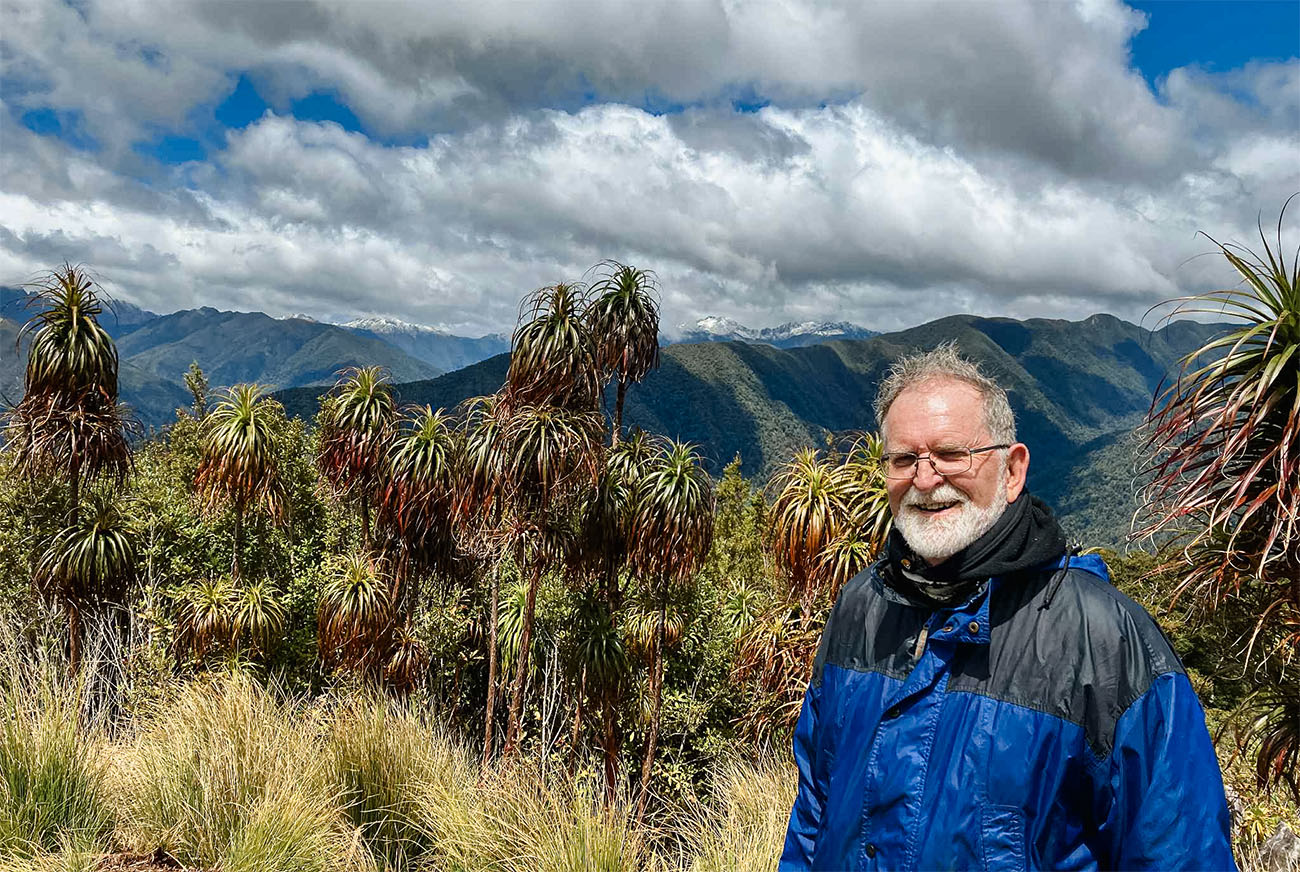
I’ve long been an advocate for op shopping – the unpredictable assortments of goods to sift through, the thrill of a good find, the satisfaction of only spending a couple dollars. In fact, I write this while wearing a second-hand jersey, shirt, and pair of boots.
It’s more than a few bucks that you save at an op shop, though. Op shops across the country are diverting thousands of tonnes of products from landfill every year. They also reinvest millions of dollars back into their communities – an estimated $78 million in 2025-26, according to Charitable Reuse Aotearoa.1
Because op shops are more than just shops.
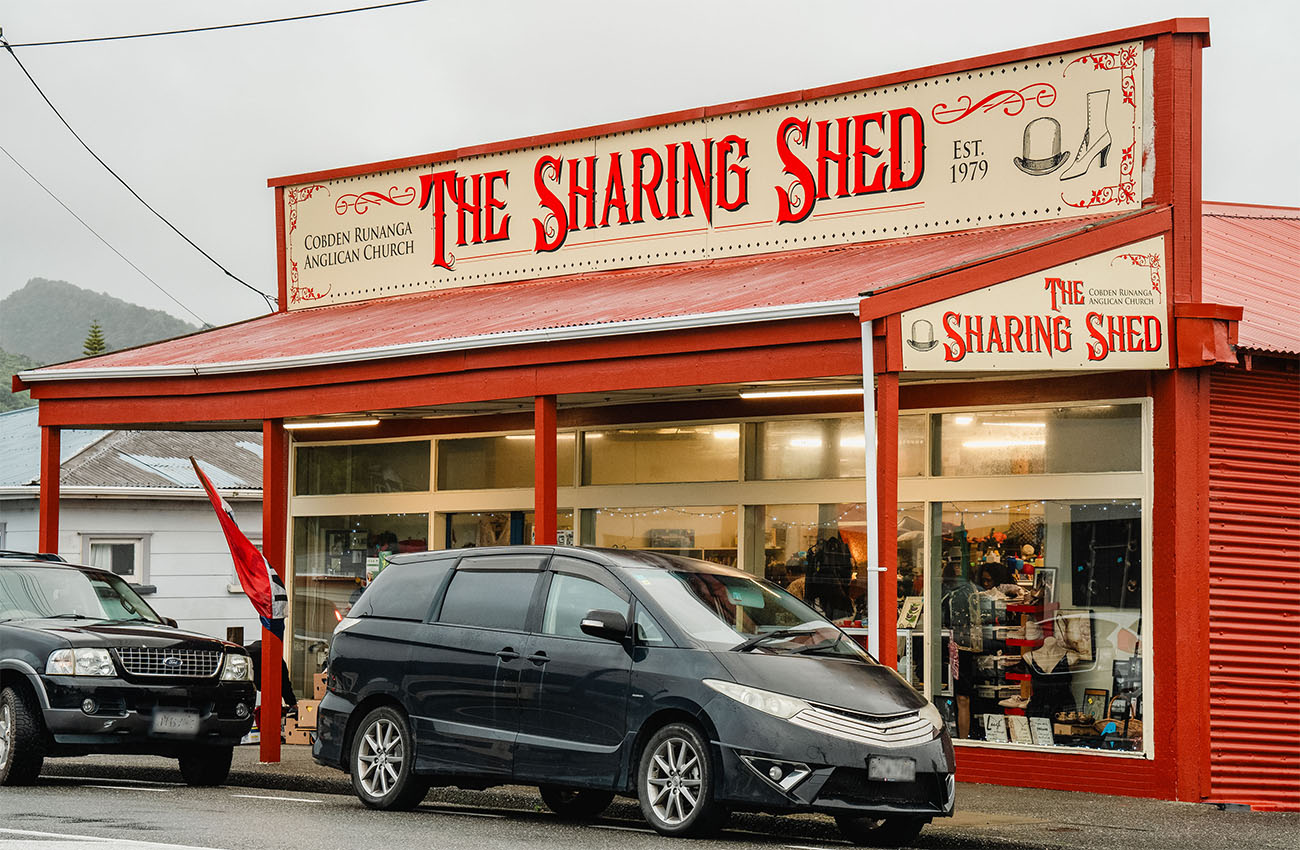
One of these op shops is The Sharing Shed, part of the Cobden-Runanga Parish. The Sharing Shed has been operating for nearly 50 years, not only contributing to the parish finances, but serving the community of Cobden.
I had a chat with Nicki Mora, who joined the op shop team around five years ago and has been a part of breathing new life into the faithful establishment. We spoke about the inner workings of the shop, the motives behind it, and the impact it makes on the West Coast.
Nicki: It's not that I'm an op shop snob, but I'd never had any reason to go into the shop. But one day, I needed to chat to someone who was at The Sharing Shed. As we were chatting I just happened to catch a glimpse of the back room, the sorting room – it was full of bags right to the door. You basically couldn't get into the room. I remember looking back at the volunteers and thinking There is no way you lovely ladies are going to be able to get this under control by yourselves.
So I put all the seats down in my car and filled it with as many of the bags as I possibly could squeeze into it, took them to The Shed [youth group building], and started sorting them. And as I did that I was going, Oh my gosh, this is good – I like this. I'd usually go to one of the shops that had cheaper clothing, right? But I was looking at this gorgeous label clothing that was much better quality than what I would normally purchase. And I knew that in the op shop it would be sold for a fraction of the price.
At that point I was hooked.
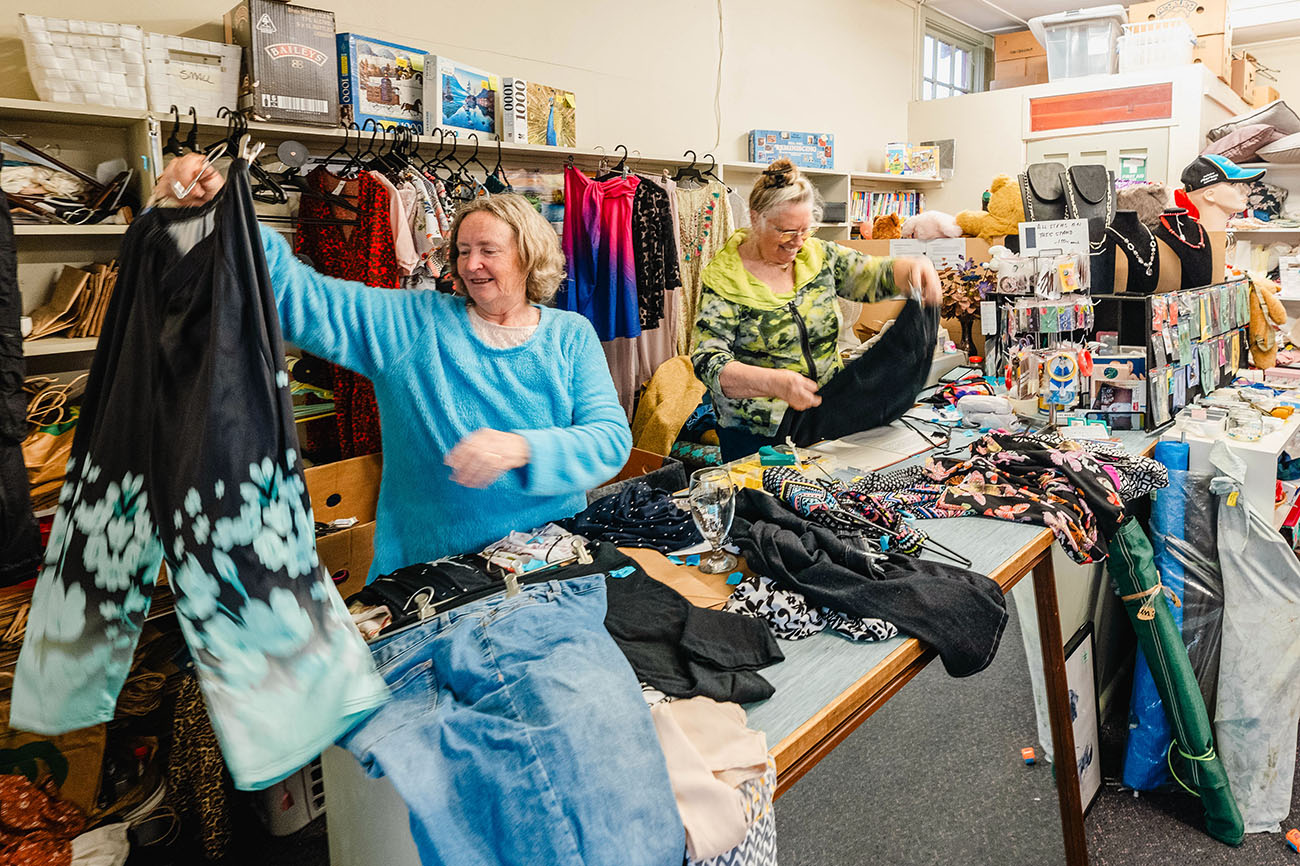
Nicki: We realised that we needed dedicated sorting teams out the back to stay on top of it. So that was a humongous turnaround. Not only was stock able to be moved quicker, but our sorting team was made up of the type of girls who look at a problem and go How can we do this better? There was an awful lot of brainstorming that happened in that back room.
We realised that the shop was not big enough to contain both summer and winter stock, so we decided to start boxing up the off-season and storing it in the garage.
Then we were able to look at our shelves and racks and start sorting them into sizes. It made a huge difference in how much we sold. Clothes were coming off the racks like you wouldn't believe.
Often what had been happening was a TV shelf or something would come in, not sell, and get used as a display shelf. So we had a whole lot of this furniture that was not fit for purpose. We couldn't effectively display anything. We looked at all that flotsam and jetsam and said, “Wouldn't it be great if we got rid of this stuff and bought some purpose-built shelving?” So we started off with one set of shelving and – it was night and day – you could fit three or four times more stuff on that shelf. Now all the front windows have got beautiful shelving with three levels. We’ve got astronomically more space to display stuff. It just transformed the place, in terms of the efficiency, the ability to display, to look professional.
Little by little we just keep coming up with ideas like that.
Nicki: For me – and I'm pretty sure the rest of our girls feel the same way – it’s more than just a shop, right? I see it as an outpost of heaven.
We’re not just there to sell stuff and make money. Our baby stuff is all 50 cents, it doesn't matter if it's label. Our toddler stuff is a dollar. Our kids’ books are 50 cents, because we want our kids to read. And in winter, quite often when we've had coats on the rack – and we're talking about beautiful expensive wool coats – that haven't sold, if it’s a really bitter day we'll take half a dozen of those coats off that rack and slowly feed them into our free bins outside for people who might need a warm coat.
The free bins are another success story too. When we first started doing the free bins, some people were concerned that people would take clothes from the boxes instead of coming into our shop and buying stuff. We found the exact opposite happened. I think actually the takings in the shop went up from the moment we started them. One day I was chatting to a mum outside as I was putting stuff in the free bins.
We also do stuff like the Cobden Community Day. Last year we did a free clothes stall there. We emptied at least 15 big bags of clothes. I think the shop is becoming known for doing things like that.
We had a nurse come in and ask if the shop would be willing to be a place where women could pick up a free cervical smear test, so now people can grab a test, do it at home, and then drop it in the box. So we've managed to get quite a few of those smear tests out into the community.
There’s the food pantry too. Last year, I said, “How many people have got lemon trees with fruit falling off and just rotting on the ground? How about grabbing your lemons or excess veggies and putting them in the pantry?” That way they don't go to waste – rhubarb, herbs, whatever. We also have some organisations drop food off – boxes of buns and stuff. As you can see, it's quite a busy wee place.
We are working to create a sense of community in the shop. With the free bins, pantry, smear tests, we feel that we’ve become a community hub. We chat to people, offer them cuppas – some people come not to buy anything but just for the company.
Nicki: A lot of them were already there, but there have been new ones that came along. We have around 30 plus volunteers, many of whom are from the community. and we have a good laugh together. It's a really hard case place. We have a late night on a Thursday night and the Thursday night crew are hilarious.
It's quite a friendly, welcoming place. So if I'm making the girls a cuppa when I'm in the shop, I'll often ask customers if they want one too. So you get to know people, not just the staff that you're working with. I've always wanted there to be a bridge from the shop to the church.
There have been a number who have come in the door and have made connections with faith. And so that is the outpost of heaven side of things. We're baptising some of them.
Nicki: Well, to be a shop you've got to have volunteers, and you've to have stuff to sell.
As I said, we have a good team of people who get on really well with each other. And I can’t forget Tim and his team, who did all the shelving, lights, heaters, painting, roofing, electrical testing and so on. There are people behind the scenes doing the banking and the rosters, et cetera, and without them the shop couldn’t run.
And we're really blessed because we have lots of donations coming. We've had donations from Nelson, Christchurch, Westport, all over the show. Sometimes that's a real challenge for us in the back room but we always manage to make our way through!
It's not about money. Sure, it's good to make the funds, right? But that isn't where it begins and ends. I believe actually that when you live like Christ, doing what Jesus would do in each situation, God blesses you.
1 Aotearoa Reuse Impact Study, Charitable Reuse Aotearoa, July 2026.
Check out other articles in the
series below.
More articles in the
series are to come.
We have invited these writers to share their experiences, ideas and opinions in the hope that these will provoke thought, challenge you to go deeper and inspire you to put your faith into action. These articles should not be taken as the official view of the Nelson Diocese on any particular matter.
I’ve long been an advocate for op shopping – the unpredictable assortments of goods to sift through, the thrill of a good find, the satisfaction of only spending a couple dollars. In fact, I write this while wearing a second-hand jersey, shirt, and pair of boots.
It’s more than a few bucks that you save at an op shop, though. Op shops across the country are diverting thousands of tonnes of products from landfill every year. They also reinvest millions of dollars back into their communities – an estimated $78 million in 2025-26, according to Charitable Reuse Aotearoa.1
Because op shops are more than just shops.
One of these op shops is The Sharing Shed, part of the Cobden-Runanga Parish. The Sharing Shed has been operating for nearly 50 years, not only contributing to the parish finances, but serving the community of Cobden.
I had a chat with Nicki Mora, who joined the op shop team around five years ago and has been a part of breathing new life into the faithful establishment. We spoke about the inner workings of the shop, the motives behind it, and the impact it makes on the West Coast.
Nicki: It's not that I'm an op shop snob, but I'd never had any reason to go into the shop. But one day, I needed to chat to someone who was at The Sharing Shed. As we were chatting I just happened to catch a glimpse of the back room, the sorting room – it was full of bags right to the door. You basically couldn't get into the room. I remember looking back at the volunteers and thinking There is no way you lovely ladies are going to be able to get this under control by yourselves.
So I put all the seats down in my car and filled it with as many of the bags as I possibly could squeeze into it, took them to The Shed [youth group building], and started sorting them. And as I did that I was going, Oh my gosh, this is good – I like this. I'd usually go to one of the shops that had cheaper clothing, right? But I was looking at this gorgeous label clothing that was much better quality than what I would normally purchase. And I knew that in the op shop it would be sold for a fraction of the price.
At that point I was hooked.
Nicki: We realised that we needed dedicated sorting teams out the back to stay on top of it. So that was a humongous turnaround. Not only was stock able to be moved quicker, but our sorting team was made up of the type of girls who look at a problem and go How can we do this better? There was an awful lot of brainstorming that happened in that back room.
We realised that the shop was not big enough to contain both summer and winter stock, so we decided to start boxing up the off-season and storing it in the garage.
Then we were able to look at our shelves and racks and start sorting them into sizes. It made a huge difference in how much we sold. Clothes were coming off the racks like you wouldn't believe.
Often what had been happening was a TV shelf or something would come in, not sell, and get used as a display shelf. So we had a whole lot of this furniture that was not fit for purpose. We couldn't effectively display anything. We looked at all that flotsam and jetsam and said, “Wouldn't it be great if we got rid of this stuff and bought some purpose-built shelving?” So we started off with one set of shelving and – it was night and day – you could fit three or four times more stuff on that shelf. Now all the front windows have got beautiful shelving with three levels. We’ve got astronomically more space to display stuff. It just transformed the place, in terms of the efficiency, the ability to display, to look professional.
Little by little we just keep coming up with ideas like that.
Nicki: For me – and I'm pretty sure the rest of our girls feel the same way – it’s more than just a shop, right? I see it as an outpost of heaven.
We’re not just there to sell stuff and make money. Our baby stuff is all 50 cents, it doesn't matter if it's label. Our toddler stuff is a dollar. Our kids’ books are 50 cents, because we want our kids to read. And in winter, quite often when we've had coats on the rack – and we're talking about beautiful expensive wool coats – that haven't sold, if it’s a really bitter day we'll take half a dozen of those coats off that rack and slowly feed them into our free bins outside for people who might need a warm coat.
The free bins are another success story too. When we first started doing the free bins, some people were concerned that people would take clothes from the boxes instead of coming into our shop and buying stuff. We found the exact opposite happened. I think actually the takings in the shop went up from the moment we started them. One day I was chatting to a mum outside as I was putting stuff in the free bins.
We also do stuff like the Cobden Community Day. Last year we did a free clothes stall there. We emptied at least 15 big bags of clothes. I think the shop is becoming known for doing things like that.
We had a nurse come in and ask if the shop would be willing to be a place where women could pick up a free cervical smear test, so now people can grab a test, do it at home, and then drop it in the box. So we've managed to get quite a few of those smear tests out into the community.
There’s the food pantry too. Last year, I said, “How many people have got lemon trees with fruit falling off and just rotting on the ground? How about grabbing your lemons or excess veggies and putting them in the pantry?” That way they don't go to waste – rhubarb, herbs, whatever. We also have some organisations drop food off – boxes of buns and stuff. As you can see, it's quite a busy wee place.
We are working to create a sense of community in the shop. With the free bins, pantry, smear tests, we feel that we’ve become a community hub. We chat to people, offer them cuppas – some people come not to buy anything but just for the company.
Nicki: A lot of them were already there, but there have been new ones that came along. We have around 30 plus volunteers, many of whom are from the community. and we have a good laugh together. It's a really hard case place. We have a late night on a Thursday night and the Thursday night crew are hilarious.
It's quite a friendly, welcoming place. So if I'm making the girls a cuppa when I'm in the shop, I'll often ask customers if they want one too. So you get to know people, not just the staff that you're working with. I've always wanted there to be a bridge from the shop to the church.
There have been a number who have come in the door and have made connections with faith. And so that is the outpost of heaven side of things. We're baptising some of them.
Nicki: Well, to be a shop you've got to have volunteers, and you've to have stuff to sell.
As I said, we have a good team of people who get on really well with each other. And I can’t forget Tim and his team, who did all the shelving, lights, heaters, painting, roofing, electrical testing and so on. There are people behind the scenes doing the banking and the rosters, et cetera, and without them the shop couldn’t run.
And we're really blessed because we have lots of donations coming. We've had donations from Nelson, Christchurch, Westport, all over the show. Sometimes that's a real challenge for us in the back room but we always manage to make our way through!
It's not about money. Sure, it's good to make the funds, right? But that isn't where it begins and ends. I believe actually that when you live like Christ, doing what Jesus would do in each situation, God blesses you.
Check out other articles in the
series below.
More articles in the
series are to come.