This Advent season Richmond Anglican have been exploring Christmas promises in Isaiah.
In Isaiah 7 we saw the perfect promise to save any who fully trust in God, rather than trusting their own plans and schemes like King Ahaz.
On Sunday at Holy Trinity we heard God's promise to bring a great light, his Perfect King, into the deep darkness of the world in Isaiah 9:1 and 2. The people of Judah had descended into such deep darkness that they had allied with the Assyrians, stripping the temple of gold and silver to pay them for protection.
They were in such spiritual darkness, that instead of turning to God’s Word for guidance God’s people were consulting the spirits of the dead through mediums and spiritualists!
The faithful remnant within Judah needed to hold on to the promise that this physical and spiritual darkness wouldn’t last forever. God would send a perfect king, the great light.
This king would be the Wonderful Counsellor, Mighty God, Everlasting Father, and Prince of Peace (Isaiah 9:6). He would establish his perfect peace, he would wipe sin from human hearts, he would restore our relationships with God, and turn aside his wrath.
The same evening we heard this message of the coming light Jewish families gathered to remember the faithfulness of the God of the Bible at Bondi Beach in Sydney. They were ruthlessly targeted and murdered as they celebrated the festival of Hanukkah: the festival of lights. It's been an appalling attack of cowardice on families, by men committed to perpetuating darkness.
The festival of Hanukkah appears in the New Testament, in John 10:22-23 Jesus celebrates this feast in the temple in Jerusalem.There it is called the feast of dedication. It isn't a feast mandated in the Scriptures, like the Passover, or the Day of Atonement, but it was an important feast in the later Jewish period. It remembered a great victory that a Jewish resistance movement had, led by the Maccabees.
In 165BC they managed to overthrow a Greek king named Antiochus IV Epiphanes who was ruling Judea. He tried to obliterate the Jewish faith by banning circumcision and teaching the Torah, and even desecrated the temple by sacrificing a pig on the altar there.
After he was overthrown, the temple was reclaimed and rededicated, but as the people of Israel came to the temple in worship they found a problem. They didn't have enough consecrated oil to light the great menorah in worship. The tradition handed down is that God performed a miracle and that oil – one day’s worth of oil – burnt for eight days.
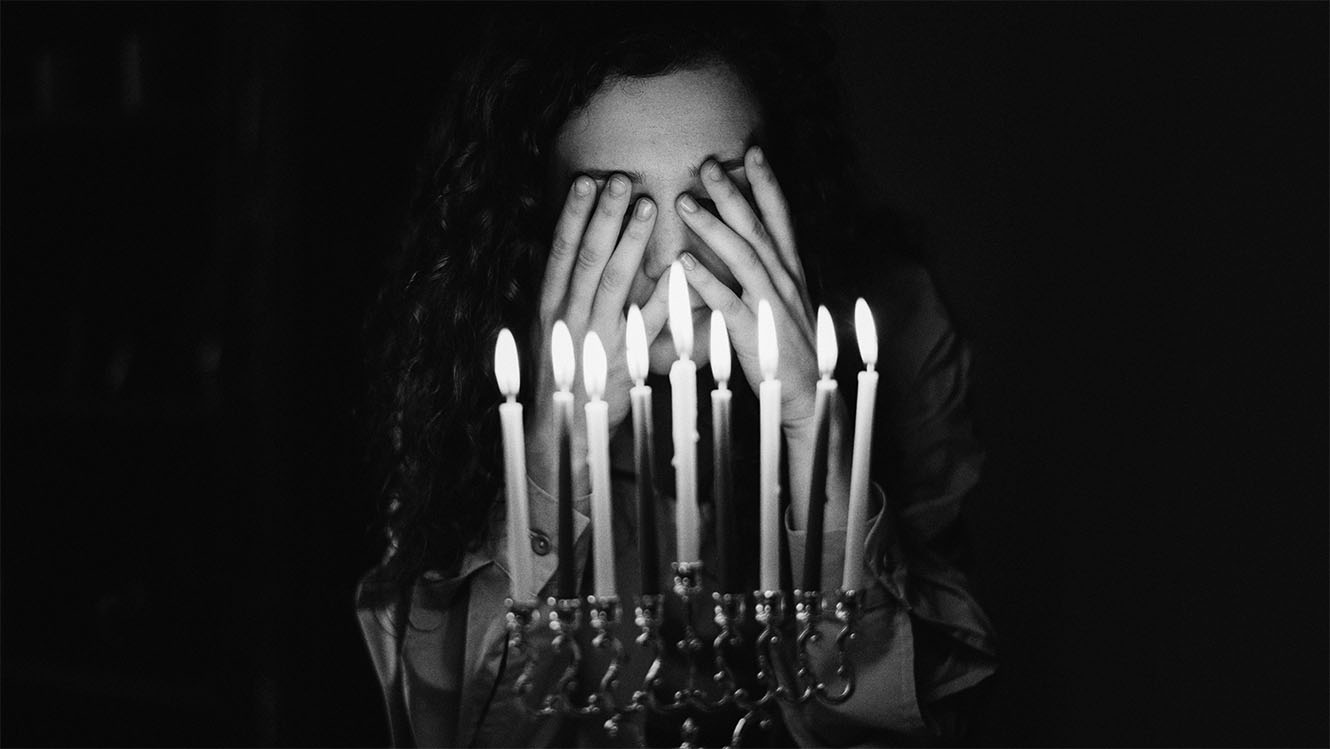
At a time when the very survival of the Jewish people was at stake, God proved himself faithful once again. The rededication of his people was really a reflection of his original dedication to them. The menorah burning for these eight days was taken as a sign that the promised light hadn't been extinguished, even by an enemy as evil as Antiochus. Out of this came the central custom of the holiday: lighting the hanukkiah, a nine-branched candelabra representing this miracle of God's provision.
Dan Sered, who is now a follower of Jesus having been raised in a secular Jewish home writes the following:
Many years later, John's Gospel records that Jesus was in the Temple at Hanukkah, walking in Solomon's Colonnade. This was no casual detail: it shows that Jesus was aligning himself with the themes the Temple embodied. John is not just giving historical colour; he is signalling that Jesus' identity and mission are intimately connected to God's faithfulness and the spiritual light symbolised by Hanukkah.1
The festival of Hanukkah was commemorated to hold on to the hope that the covenant keeping God would bring the great light into the world to dispel darkness.
As we've seen the horrific scenes in the media over the past two days, the deep darkness that has taken lives at Bondi reminds us all that the kingdom of the Perfect King hasn't fully come yet.
His birth was the dawning of the great light, and his resurrection from the dead assures us that even death cannot extinguish it, his return will usher it in fully – and the darkness of sin will be dispelled for evermore.
In the birth of Jesus, the light has come into the world, and enlarged the scope of his kingdom. Through faith in Christ alone, men and women and children from any people group, any background, can be grafted into the true Israel.2 Christians don’t need to light a hanukkiah in anticipation of the messiah coming as the great light, we can look back to the birth of Jesus, and anticipate his return, assured that through faith in his substitutionary death and bodily resurrection the great light has come, and is at work now, by the Holy Spirit bringing the Word of God alive in hearts, dispelling darkness. Christians need that hope, that assurance, while we live in dark times like we’ve seen in Sydney this week.
Dark times like this show us how desperately the world needs the light of Christ, which calls for a radical new ethic of blessing those who curse, and loving those who harm and hurt.
Dark times like this show us how desperately the world needs the light of Christ, which changes hearts and minds to repentance.
Dark times like this show us how desperately the world needs the light of Christ, which is taken out into the deepest darkest corners by his people.
I pray that, even in dark times like this, the wonderful promises of God, made known in the Bible, and fulfilled in Jesus are a comfort and a catalyst for us to be prayerful peacemakers helping men and women and children to walk in the glorious light which has been made known to us in Jesus.
Which is why at Advent, as we anticipate the coming of that great light, in a dark world we pray “Come Lord Jesus.”
1 Dan Sered, “Understanding Your Jewish Neighbour: Hanukkah”, Lausanne Movement.
2 Matthew tells us that Jesus fulfills Hosea 11 (Matt. 2:13–15). He is the true Israel, the faithful Israel who succeeds where old covenant Israel failed.
Check out other articles in the
series below.
More articles in the
series are to come.
We have invited these writers to share their experiences, ideas and opinions in the hope that these will provoke thought, challenge you to go deeper and inspire you to put your faith into action. These articles should not be taken as the official view of the Nelson Diocese on any particular matter.
This Advent season Richmond Anglican have been exploring Christmas promises in Isaiah.
In Isaiah 7 we saw the perfect promise to save any who fully trust in God, rather than trusting their own plans and schemes like King Ahaz.
On Sunday at Holy Trinity we heard God's promise to bring a great light, his Perfect King, into the deep darkness of the world in Isaiah 9:1 and 2. The people of Judah had descended into such deep darkness that they had allied with the Assyrians, stripping the temple of gold and silver to pay them for protection.
They were in such spiritual darkness, that instead of turning to God’s Word for guidance God’s people were consulting the spirits of the dead through mediums and spiritualists!
The faithful remnant within Judah needed to hold on to the promise that this physical and spiritual darkness wouldn’t last forever. God would send a perfect king, the great light.
This king would be the Wonderful Counsellor, Mighty God, Everlasting Father, and Prince of Peace (Isaiah 9:6). He would establish his perfect peace, he would wipe sin from human hearts, he would restore our relationships with God, and turn aside his wrath.
The same evening we heard this message of the coming light Jewish families gathered to remember the faithfulness of the God of the Bible at Bondi Beach in Sydney. They were ruthlessly targeted and murdered as they celebrated the festival of Hanukkah: the festival of lights. It's been an appalling attack of cowardice on families, by men committed to perpetuating darkness.
The festival of Hanukkah appears in the New Testament, in John 10:22-23 Jesus celebrates this feast in the temple in Jerusalem.There it is called the feast of dedication. It isn't a feast mandated in the Scriptures, like the Passover, or the Day of Atonement, but it was an important feast in the later Jewish period. It remembered a great victory that a Jewish resistance movement had, led by the Maccabees.
In 165BC they managed to overthrow a Greek king named Antiochus IV Epiphanes who was ruling Judea. He tried to obliterate the Jewish faith by banning circumcision and teaching the Torah, and even desecrated the temple by sacrificing a pig on the altar there.
After he was overthrown, the temple was reclaimed and rededicated, but as the people of Israel came to the temple in worship they found a problem. They didn't have enough consecrated oil to light the great menorah in worship. The tradition handed down is that God performed a miracle and that oil – one day’s worth of oil – burnt for eight days.
At a time when the very survival of the Jewish people was at stake, God proved himself faithful once again. The rededication of his people was really a reflection of his original dedication to them. The menorah burning for these eight days was taken as a sign that the promised light hadn't been extinguished, even by an enemy as evil as Antiochus. Out of this came the central custom of the holiday: lighting the hanukkiah, a nine-branched candelabra representing this miracle of God's provision.
Dan Sered, who is now a follower of Jesus having been raised in a secular Jewish home writes the following:
Many years later, John's Gospel records that Jesus was in the Temple at Hanukkah, walking in Solomon's Colonnade. This was no casual detail: it shows that Jesus was aligning himself with the themes the Temple embodied. John is not just giving historical colour; he is signalling that Jesus' identity and mission are intimately connected to God's faithfulness and the spiritual light symbolised by Hanukkah.1
The festival of Hanukkah was commemorated to hold on to the hope that the covenant keeping God would bring the great light into the world to dispel darkness.
As we've seen the horrific scenes in the media over the past two days, the deep darkness that has taken lives at Bondi reminds us all that the kingdom of the Perfect King hasn't fully come yet.
His birth was the dawning of the great light, and his resurrection from the dead assures us that even death cannot extinguish it, his return will usher it in fully – and the darkness of sin will be dispelled for evermore.
In the birth of Jesus, the light has come into the world, and enlarged the scope of his kingdom. Through faith in Christ alone, men and women and children from any people group, any background, can be grafted into the true Israel.2 Christians don’t need to light a hanukkiah in anticipation of the messiah coming as the great light, we can look back to the birth of Jesus, and anticipate his return, assured that through faith in his substitutionary death and bodily resurrection the great light has come, and is at work now, by the Holy Spirit bringing the Word of God alive in hearts, dispelling darkness. Christians need that hope, that assurance, while we live in dark times like we’ve seen in Sydney this week.
Dark times like this show us how desperately the world needs the light of Christ, which calls for a radical new ethic of blessing those who curse, and loving those who harm and hurt.
Dark times like this show us how desperately the world needs the light of Christ, which changes hearts and minds to repentance.
Dark times like this show us how desperately the world needs the light of Christ, which is taken out into the deepest darkest corners by his people.
I pray that, even in dark times like this, the wonderful promises of God, made known in the Bible, and fulfilled in Jesus are a comfort and a catalyst for us to be prayerful peacemakers helping men and women and children to walk in the glorious light which has been made known to us in Jesus.
Which is why at Advent, as we anticipate the coming of that great light, in a dark world we pray “Come Lord Jesus.”
Check out other articles in the
series below.
More articles in the
series are to come.