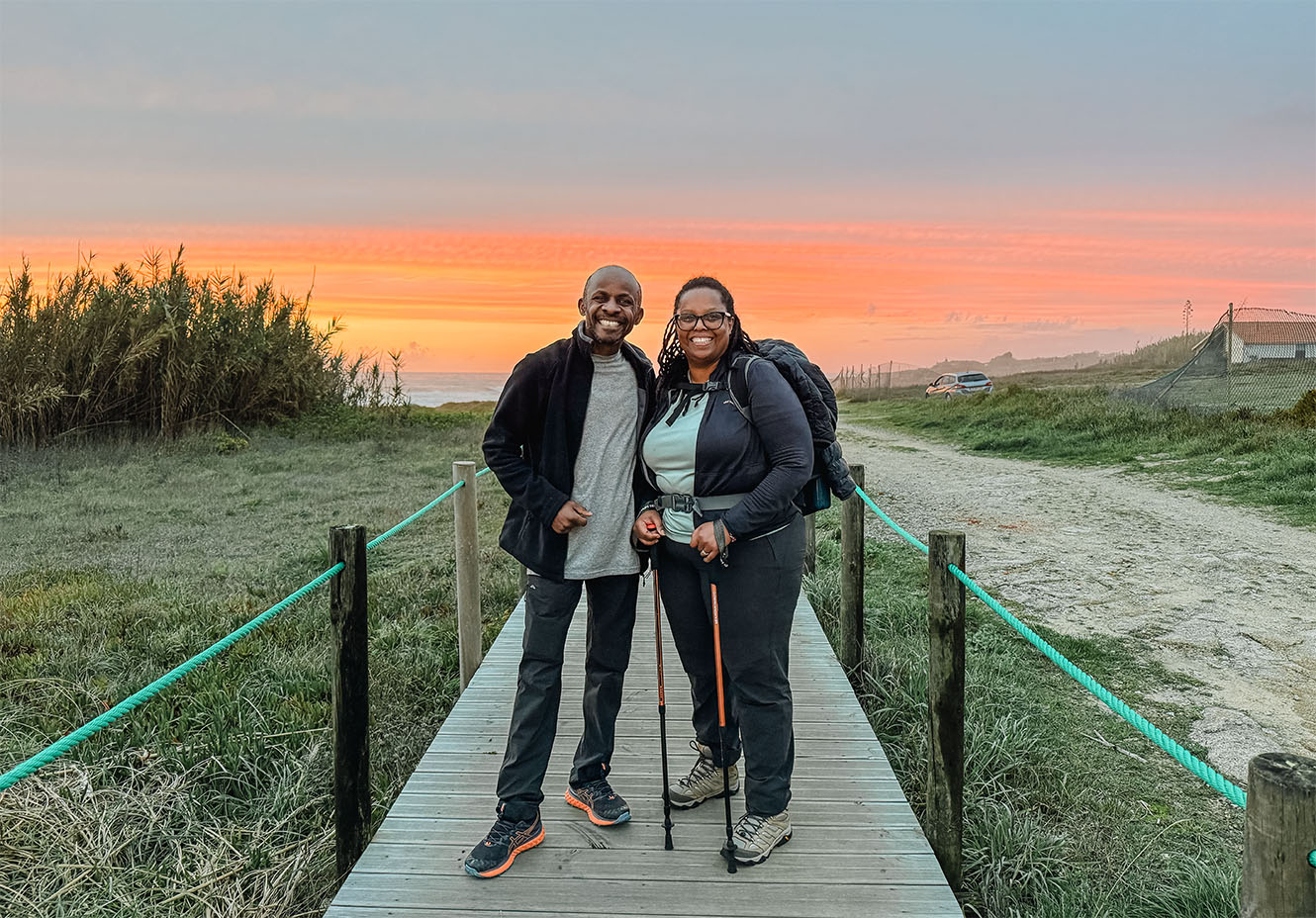
I’ve come back from sabbatical deeply grateful – grateful for the time away, grateful for the work God has done in me, and grateful to be back with you as we labour together in this part of God’s vineyard.
I genuinely missed you. And I return with a renewed sense that God has important work for the diocese to do together in the years ahead.
But before we talk about that work, I want to talk about Jesus. A reminder of my charge in September last year about hearts that burn.
Burning hearts come from walking with Jesus.
I went into this season with two words on my heart: thirst and gratitude.
Thirst that I would encounter Jesus on the road. A longing for more of Jesus, not more activity.
Gratitude that Jesus walks with me. A desire to notice, see and recognise Jesus in every part of my journey.
Alongside that, I carried a phrase from a book I read early on, How People Change by Timothy Lane and Paul Tripp: “The Christian life is a state of thankful discontent or joyful dissatisfaction.”
That line became a prayer for me. I asked the Lord to help me live each day deeply thankful – thankful for his grace, thankful for the people and communities he has used to shape me – while also remaining open to the areas where he still wants to form me into his likeness. That posture of thirst and gratitude, joy and longing, set the tone for everything that followed.
This story from Luke 24 anchored me throughout my sabbatical:
As they approached the village to which they were going, Jesus continued on as if he were going farther. But they urged him strongly, “Stay with us, for it is nearly evening; the day is almost over.” So he went in to stay with them.
When he was at the table with them, he took bread, gave thanks, broke it and began to give it to them. Then their eyes were opened and they recognised him, and he disappeared from their sight. They asked each other, “Were not our hearts burning within us while he talked with us on the road and opened the Scriptures to us?”
Luke 24:28-32
Note that the risen Christ becomes known not through spectacle but through ordinary practices – walking, listening and breaking bread.
My first retreat was at a Benedictine monastery in the mountains of Oregon, in the Pacific Northwest United States.
I arrived eager to be useful. I wanted to help with the tractors, get involved, do something practical. But the invitation was simply to sit in silence.
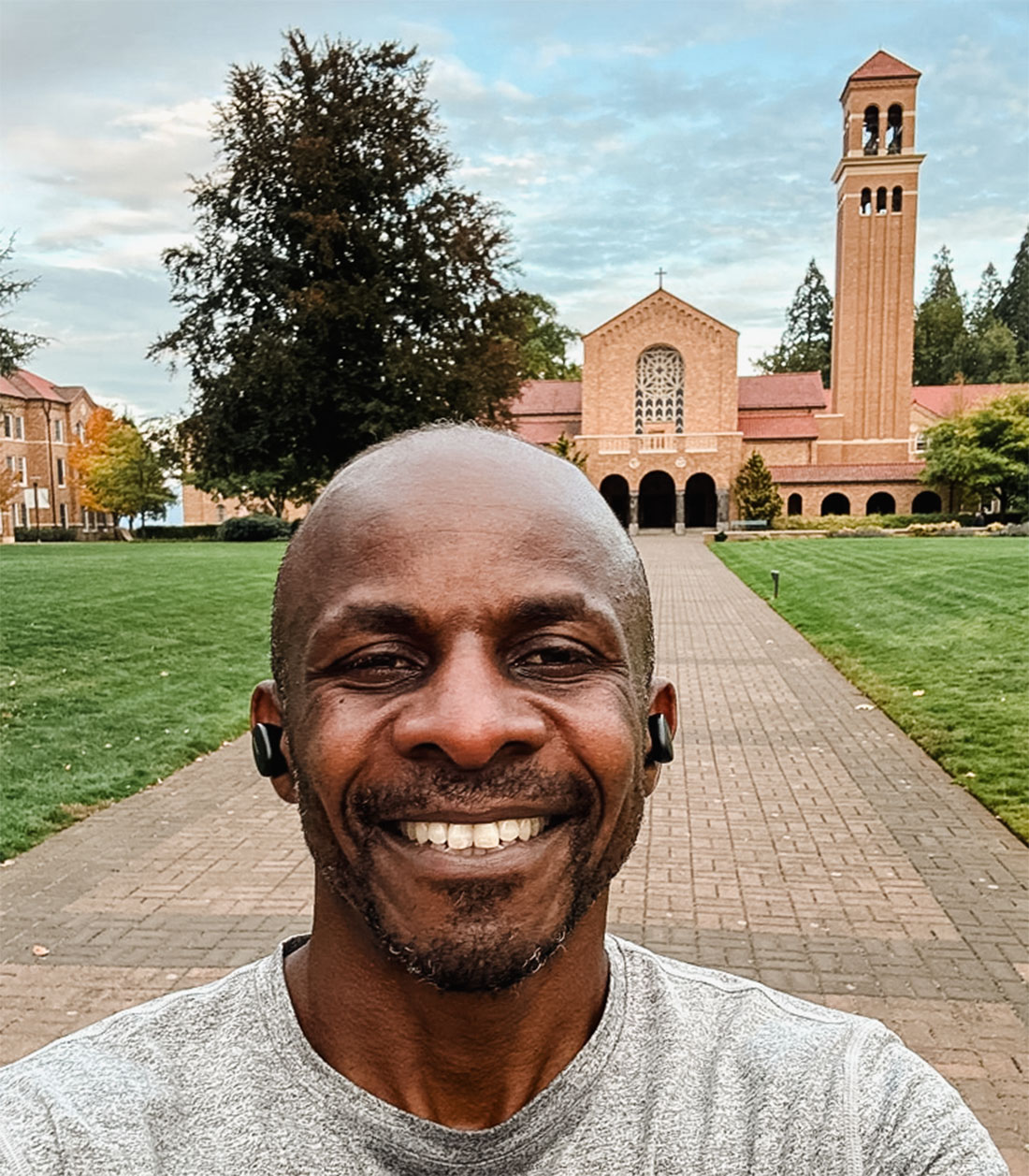
Rooted deeply in the 1,500-year-old Rule of St Benedict, the monks gather in the abbey for prayer six times each day starting with Vigils at 5:20am and concluding with Compline at 7:25pm. I joined them in prayer six times a day for the week I was there, and ate meals with them.
It was uncomfortable. It was confronting. But it was good.
Those two words – thirst and gratitude – kept resurfacing. They softened me. They slowed me down. They reminded me that devotion to Jesus isn’t about intensity, it’s about relationship.
New Testament writers use “walk” to describe discipleship as a lived, embodied journey shaped by Christ’s presence.
And in the Old Testament we see walking as a sacred activity, an activity of God. One of the first things we find God doing after the creation accounts in Genesis is walking in the garden.
Carry this idea that “walking” expresses relationship, intimacy, and companionship with God.
We enjoy communion with Jesus through slowing down long enough to receive, not achieve. It’s not easy for someone who likes running!
During my sabbatical, Watiri and I walked the Camino de Santiago. We took the Portuguese route, walking 260 kilometres over two weeks from Porto in Portugal to Santiago de Compostela in Spain.
The yellow arrow is an iconic symbol of the Camino, found in all kinds of places along the way – cities and forests, pavement and fenceposts – pointing pilgrims in the right direction. Throughout our entire hike, yellow arrows big and small guided our steps.

The Emmaus story is a movement from disorientation to reorientation. The disciples' heavy hearts and confusion mirror the human experience of disappointment and disorientation. Jesus’ scriptural teaching reorients their path, turning their feet back toward the truth of God’s purposes. There’s a beautiful verse in Psalm 119 that speaks about this alignment or reorientation.
When I think of your ways,
I turn my feet to your decrees
Psalm 119:58 (NRSVA)
I also love The Message translation.
When I took a long, careful look at your ways,
I got my feet back on the trail you blazed.
I was up at once, didn’t drag my feet, I was quick to follow your orders.
Jesus interprets the Scriptures on the road, and this teaching becomes the source of the disciples’ reorientation and renewal, rekindling their passion and setting their hearts on fire.
One step at a time makes even a long journey possible. The changing landscape is part of the beauty, not a distraction from it.
It struck me how much this mirrors my calling.
We don’t need to see the whole path. We just need to take the next faithful step. And we walk it together. Looking for signs and landmarks – and yellow arrows – that point the way. That is our calling.
Before Watiri and I embarked on the Camino, we watched the movie The Way, My Way in preparation.
The movie follows Bill, a somewhat stubborn and self‑focused Australian, who decides – without really knowing why – to walk the Camino de Santiago. As he travels, he meets a mix of quirky, warm, and challenging fellow pilgrims.
The journey becomes less about reaching Santiago and more about confronting himself, opening up to others, and finding meaning “one step at a time”.
I made friends along the way too, bonded by our shared endeavour. We kept bumping into each other for about five days. When I reached the final destination, the cathedral of Santiago de Compostela, I waited hours for them to arrive too so we could share in the joy of completing our journey together.
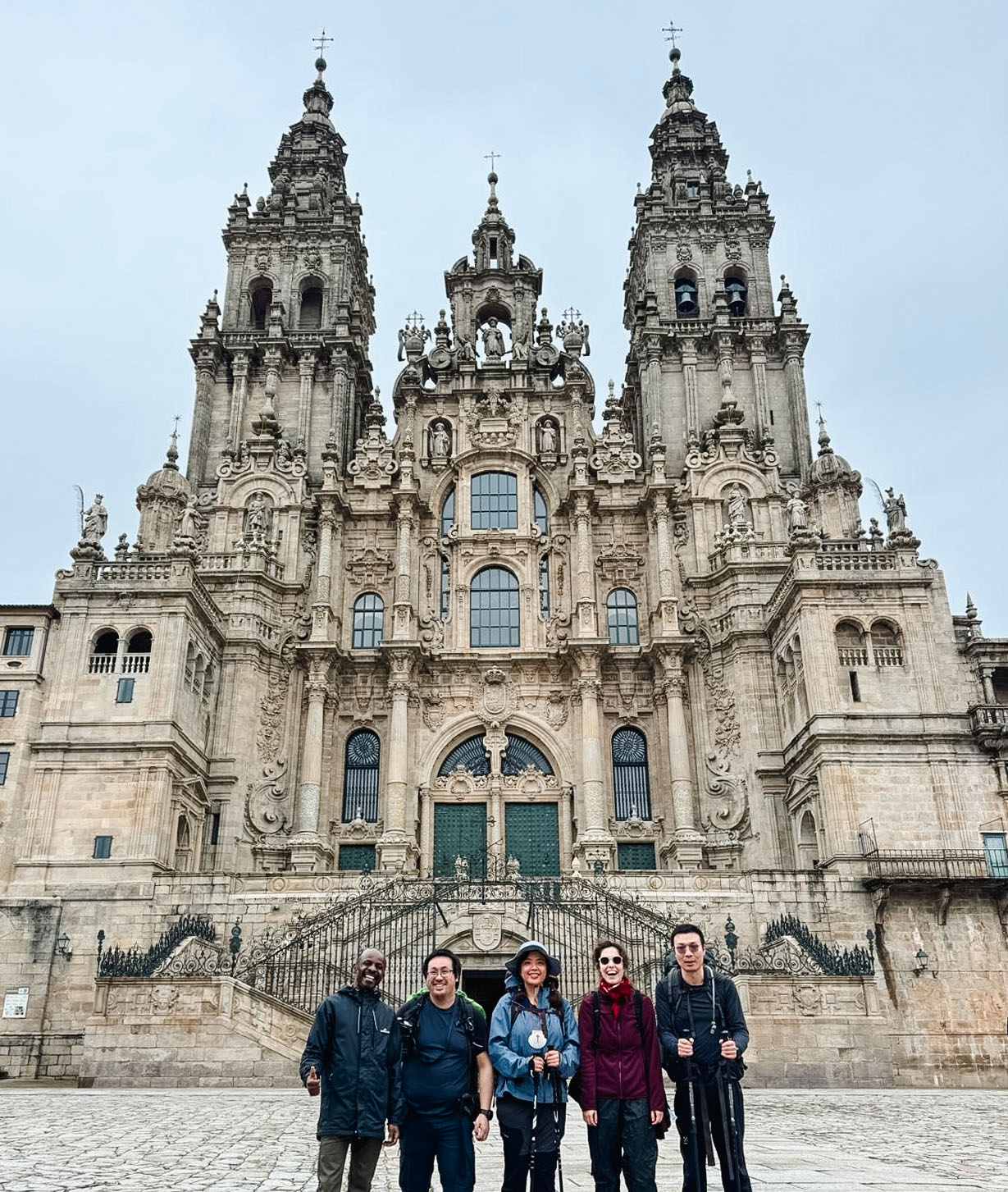
In one place on the Camino, we found shells free to pick up which said, “On the Camino, you’re never alone…”
As Jesus breaks the bread, the disciples' eyes are opened. There is an opening of eyes that comes through community with those we break bread with. Community is found in people who hold you, steady you, and remind you who you are.
Last year, I was struck by the invitation from Sam Harvey at Leadership Camp to “normalise radical devotion to Jesus”.
I’ve come back with the conviction that radical devotion isn’t about intensity. It’s about intimacy. It’s about rediscovering our first love. It’s about tending to the relationship that fuels everything else. It’s about letting Jesus turn our anxieties into joy and hope by his presence like the two disciples walking on the road to Emmaus. It's about guarding our relationship with Jesus.
The joy of being with him. The joy of hearing his voice. The joy of knowing we are loved. The joy of knowing we’re not alone.
Let’s be people whose hearts burn because we walk closely with Jesus.
I’m deeply thankful for the team in the diocese who allowed me to fully switch off so I could be still.
I return with a renewed sense of the work that God has called us into this next season together here in Nelson – work that matters, that will require courage, and that will be sustained only if our hearts burn as we walk closely with Jesus.
And I’m grateful, deeply grateful, to be walking this next stretch with you.
Check out other articles in the
series below.
More articles in the
series are to come.
We have invited these writers to share their experiences, ideas and opinions in the hope that these will provoke thought, challenge you to go deeper and inspire you to put your faith into action. These articles should not be taken as the official view of the Nelson Diocese on any particular matter.
I’ve come back from sabbatical deeply grateful – grateful for the time away, grateful for the work God has done in me, and grateful to be back with you as we labour together in this part of God’s vineyard.
I genuinely missed you. And I return with a renewed sense that God has important work for the diocese to do together in the years ahead.
But before we talk about that work, I want to talk about Jesus. A reminder of my charge in September last year about hearts that burn.
Burning hearts come from walking with Jesus.
I went into this season with two words on my heart: thirst and gratitude.
Thirst that I would encounter Jesus on the road. A longing for more of Jesus, not more activity.
Gratitude that Jesus walks with me. A desire to notice, see and recognise Jesus in every part of my journey.
Alongside that, I carried a phrase from a book I read early on, How People Change by Timothy Lane and Paul Tripp: “The Christian life is a state of thankful discontent or joyful dissatisfaction.”
That line became a prayer for me. I asked the Lord to help me live each day deeply thankful – thankful for his grace, thankful for the people and communities he has used to shape me – while also remaining open to the areas where he still wants to form me into his likeness. That posture of thirst and gratitude, joy and longing, set the tone for everything that followed.
This story from Luke 24 anchored me throughout my sabbatical:
As they approached the village to which they were going, Jesus continued on as if he were going farther. But they urged him strongly, “Stay with us, for it is nearly evening; the day is almost over.” So he went in to stay with them.
When he was at the table with them, he took bread, gave thanks, broke it and began to give it to them. Then their eyes were opened and they recognised him, and he disappeared from their sight. They asked each other, “Were not our hearts burning within us while he talked with us on the road and opened the Scriptures to us?”
Luke 24:28-32
Note that the risen Christ becomes known not through spectacle but through ordinary practices – walking, listening and breaking bread.
My first retreat was at a Benedictine monastery in the mountains of Oregon, in the Pacific Northwest United States.
I arrived eager to be useful. I wanted to help with the tractors, get involved, do something practical. But the invitation was simply to sit in silence.
Rooted deeply in the 1,500-year-old Rule of St Benedict, the monks gather in the abbey for prayer six times each day starting with Vigils at 5:20am and concluding with Compline at 7:25pm. I joined them in prayer six times a day for the week I was there, and ate meals with them.
It was uncomfortable. It was confronting. But it was good.
Those two words – thirst and gratitude – kept resurfacing. They softened me. They slowed me down. They reminded me that devotion to Jesus isn’t about intensity, it’s about relationship.
New Testament writers use “walk” to describe discipleship as a lived, embodied journey shaped by Christ’s presence.
And in the Old Testament we see walking as a sacred activity, an activity of God. One of the first things we find God doing after the creation accounts in Genesis is walking in the garden.
Carry this idea that “walking” expresses relationship, intimacy, and companionship with God.
We enjoy communion with Jesus through slowing down long enough to receive, not achieve. It’s not easy for someone who likes running!
During my sabbatical, Watiri and I walked the Camino de Santiago. We took the Portuguese route, walking 260 kilometres over two weeks from Porto in Portugal to Santiago de Compostela in Spain.
The yellow arrow is an iconic symbol of the Camino, found in all kinds of places along the way – cities and forests, pavement and fenceposts – pointing pilgrims in the right direction. Throughout our entire hike, yellow arrows big and small guided our steps.
The Emmaus story is a movement from disorientation to reorientation. The disciples' heavy hearts and confusion mirror the human experience of disappointment and disorientation. Jesus’ scriptural teaching reorients their path, turning their feet back toward the truth of God’s purposes. There’s a beautiful verse in Psalm 119 that speaks about this alignment or reorientation.
When I think of your ways,
I turn my feet to your decrees
Psalm 119:58 (NRSVA)
I also love The Message translation.
When I took a long, careful look at your ways,
I got my feet back on the trail you blazed.
I was up at once, didn’t drag my feet, I was quick to follow your orders.
Jesus interprets the Scriptures on the road, and this teaching becomes the source of the disciples’ reorientation and renewal, rekindling their passion and setting their hearts on fire.
One step at a time makes even a long journey possible. The changing landscape is part of the beauty, not a distraction from it.
It struck me how much this mirrors my calling.
We don’t need to see the whole path. We just need to take the next faithful step. And we walk it together. Looking for signs and landmarks – and yellow arrows – that point the way. That is our calling.
Before Watiri and I embarked on the Camino, we watched the movie The Way, My Way in preparation.
The movie follows Bill, a somewhat stubborn and self‑focused Australian, who decides – without really knowing why – to walk the Camino de Santiago. As he travels, he meets a mix of quirky, warm, and challenging fellow pilgrims.
The journey becomes less about reaching Santiago and more about confronting himself, opening up to others, and finding meaning “one step at a time”.
I made friends along the way too, bonded by our shared endeavour. We kept bumping into each other for about five days. When I reached the final destination, the cathedral of Santiago de Compostela, I waited hours for them to arrive too so we could share in the joy of completing our journey together.
In one place on the Camino, we found shells free to pick up which said, “On the Camino, you’re never alone…”
As Jesus breaks the bread, the disciples' eyes are opened. There is an opening of eyes that comes through community with those we break bread with. Community is found in people who hold you, steady you, and remind you who you are.
Last year, I was struck by the invitation from Sam Harvey at Leadership Camp to “normalise radical devotion to Jesus”.
I’ve come back with the conviction that radical devotion isn’t about intensity. It’s about intimacy. It’s about rediscovering our first love. It’s about tending to the relationship that fuels everything else. It’s about letting Jesus turn our anxieties into joy and hope by his presence like the two disciples walking on the road to Emmaus. It's about guarding our relationship with Jesus.
The joy of being with him. The joy of hearing his voice. The joy of knowing we are loved. The joy of knowing we’re not alone.
Let’s be people whose hearts burn because we walk closely with Jesus.
I’m deeply thankful for the team in the diocese who allowed me to fully switch off so I could be still.
I return with a renewed sense of the work that God has called us into this next season together here in Nelson – work that matters, that will require courage, and that will be sustained only if our hearts burn as we walk closely with Jesus.
And I’m grateful, deeply grateful, to be walking this next stretch with you.
Check out other articles in the
series below.
More articles in the
series are to come.