There is little to see out the window of an aeroplane between Auckland and Tonga, just a vast expanse of ocean. The first impression of Nuku'alofa was the warm wind and sticky humidity of a Pacific island. Representatives of the Anglican Church in Aotearoa, New Zealand, and Polynesia had arrived for the 67th General Synod Te Hīnota Whānui. Our hosts for the next week would overwhelm us with joyful hospitality and gratitude for being on their small place in a very big ocean.
Before Synod could begin, delegates received a royal welcome. Gathering in the Kingdom at the invitation of His Majesty King Tupou VI, we were instructed by our Tongan hosts to dress accordingly in jackets, ties, dresses, purple cassocks and dog collars. Led by a school brass band, we processed through the town centre to the royal palace. There, on the palace lawn, we experienced a traditional welcome with gifts presented to the King, including taro, kava branches and a very large boar – still alive. And what an honour then to be invited to form an orderly queue and personally greet the king with a handshake.
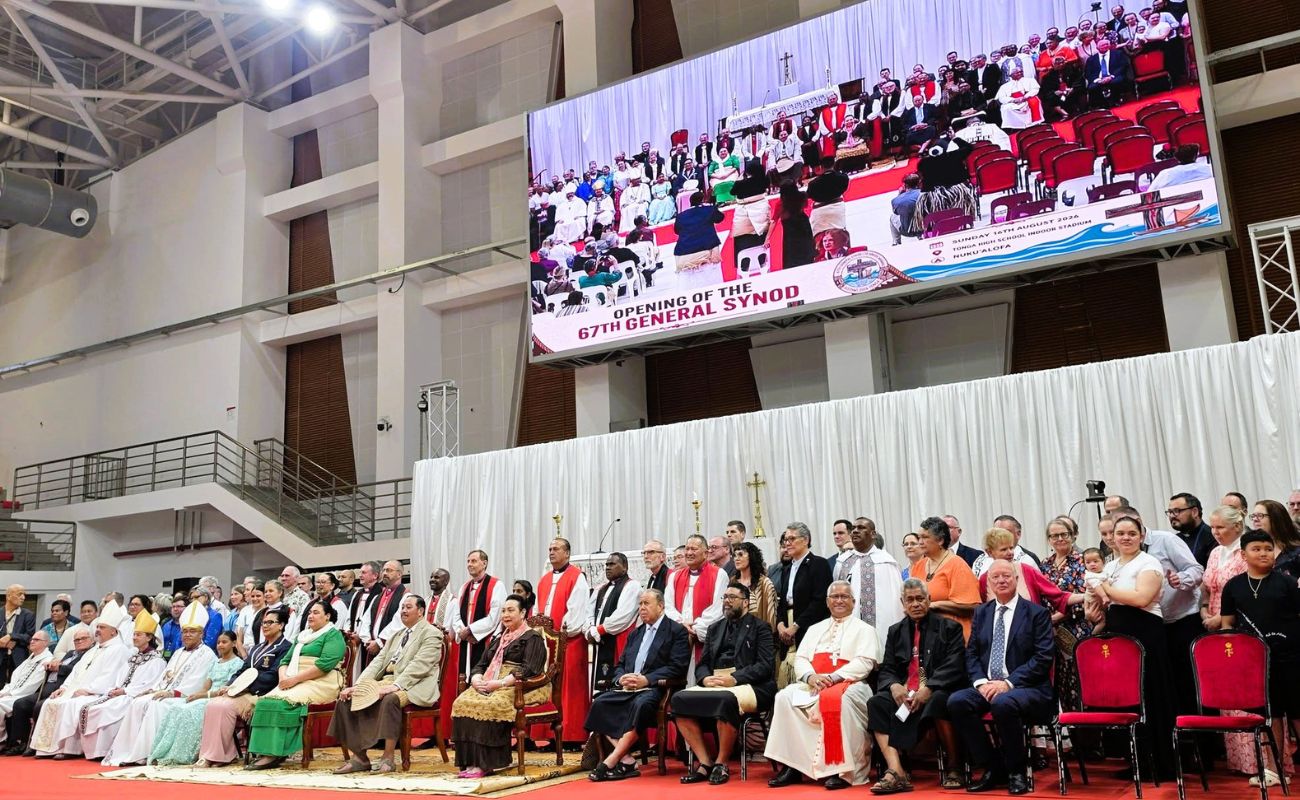
The hospitality of the Diocese of Tonga was evident throughout the week. Saturday concluded with a joyous welcome from the community of St Andrew's Anglican School, complete with traditional dancing and beautiful singing. Sunday worship was held in the Tongan High School sports hall that served as our Synod venue. His Majesty preached on the strength of unity within the woven cords of our three tikanga church. The quality of the music throughout the week was exceptional. Choirs and brass bands featured prominently, reaching a memorable high point at an evening gathering of several Tongan church choirs and bands. The combined choirs sang Handel’s Halleluia Chorus with such power and sensitivity, it took my breath away.
From Monday to Thursday Synod followed a rhythm of conference sessions in the mornings and legislative business in the afternoons. Among the most significant discussions were those concerning the wellbeing of the Pacific Ocean and the future of the communities that depend upon it. Our Pasifika brothers and sisters challenged us to recognise the scale and importance of Te Moana Nui a Kiwa (the Pacific Ocean) and to speak with a clear and united Anglican voice on issues affecting the region. Plastic pollution, biodiversity loss, rising sea temperatures and changing weather patterns are concerns for Pacific island nations, but they are also concerns for Aotearoa New Zealand. Synod concluded with a commitment to raise these concerns with the New Zealand Government, particularly in relation to New Zealand's role as host of the 2027 Pacific Islands Forum.
Several significant Bills and motions were debated. Synod passed legislation enabling Te Pīhopatanga o Aotearoa to exercise tino rangatiratanga (autonomy) in relation to the St John's College Trust Board Trust Fund distributions for the flouring of the whole church. We also debated matters including peace in Gaza and Israel, greater equity in the approval of senior bishops across the three tikanga, and the challenges and opportunities presented by artificial intelligence.
One surprising outcome was the defeat of a Bill that had returned for its final reading to ratify the use of certain Bible translations. Although the Bill had completed the required consultation process, concerns were raised about the suitability of the Inclusive Bible translation, and the Bill was ultimately withdrawn.
For some delegates, the experience of Tonga included visits to diocesan community projects, sightseeing, and whale encounters. I was privileged to join a whale-swimming excursion on Friday morning. Experiencing the Pacific Ocean in rough conditions, alongside the magnificence of humpback whales, was both humbling and awe-inspiring. Floating in that vast ocean wilderness, I felt very small and deeply aware of the privilege of being there.
Sadly, later that same day another whale-watching trip ended with the capsize and sinking of a vessel. Thankfully all aboard returned safely to shore without physical injury, though it will undoubtedly remain a significant and painful memory for those involved.
The Diocese of Tonga hosted General Synod with remarkable generosity and grace. Their hospitality was delightful, their welcome was humbling, and their gifts of song, dance and faith were inspiring. Those of us who travelled from across the Anglican Church returned home grateful for the opportunity to gather in the Kingdom and strengthened by the experience of our shared life as a three tikanga church.
Check out other articles in the
series below.
More articles in the
series are to come.
We have invited these writers to share their experiences, ideas and opinions in the hope that these will provoke thought, challenge you to go deeper and inspire you to put your faith into action. These articles should not be taken as the official view of the Nelson Diocese on any particular matter.
There is little to see out the window of an aeroplane between Auckland and Tonga, just a vast expanse of ocean. The first impression of Nuku'alofa was the warm wind and sticky humidity of a Pacific island. Representatives of the Anglican Church in Aotearoa, New Zealand, and Polynesia had arrived for the 67th General Synod Te Hīnota Whānui. Our hosts for the next week would overwhelm us with joyful hospitality and gratitude for being on their small place in a very big ocean.
Before Synod could begin, delegates received a royal welcome. Gathering in the Kingdom at the invitation of His Majesty King Tupou VI, we were instructed by our Tongan hosts to dress accordingly in jackets, ties, dresses, purple cassocks and dog collars. Led by a school brass band, we processed through the town centre to the royal palace. There, on the palace lawn, we experienced a traditional welcome with gifts presented to the King, including taro, kava branches and a very large boar – still alive. And what an honour then to be invited to form an orderly queue and personally greet the king with a handshake.
The hospitality of the Diocese of Tonga was evident throughout the week. Saturday concluded with a joyous welcome from the community of St Andrew's Anglican School, complete with traditional dancing and beautiful singing. Sunday worship was held in the Tongan High School sports hall that served as our Synod venue. His Majesty preached on the strength of unity within the woven cords of our three tikanga church. The quality of the music throughout the week was exceptional. Choirs and brass bands featured prominently, reaching a memorable high point at an evening gathering of several Tongan church choirs and bands. The combined choirs sang Handel’s Halleluia Chorus with such power and sensitivity, it took my breath away.
From Monday to Thursday Synod followed a rhythm of conference sessions in the mornings and legislative business in the afternoons. Among the most significant discussions were those concerning the wellbeing of the Pacific Ocean and the future of the communities that depend upon it. Our Pasifika brothers and sisters challenged us to recognise the scale and importance of Te Moana Nui a Kiwa (the Pacific Ocean) and to speak with a clear and united Anglican voice on issues affecting the region. Plastic pollution, biodiversity loss, rising sea temperatures and changing weather patterns are concerns for Pacific island nations, but they are also concerns for Aotearoa New Zealand. Synod concluded with a commitment to raise these concerns with the New Zealand Government, particularly in relation to New Zealand's role as host of the 2027 Pacific Islands Forum.
Several significant Bills and motions were debated. Synod passed legislation enabling Te Pīhopatanga o Aotearoa to exercise tino rangatiratanga (autonomy) in relation to the St John's College Trust Board Trust Fund distributions for the flouring of the whole church. We also debated matters including peace in Gaza and Israel, greater equity in the approval of senior bishops across the three tikanga, and the challenges and opportunities presented by artificial intelligence.
One surprising outcome was the defeat of a Bill that had returned for its final reading to ratify the use of certain Bible translations. Although the Bill had completed the required consultation process, concerns were raised about the suitability of the Inclusive Bible translation, and the Bill was ultimately withdrawn.
For some delegates, the experience of Tonga included visits to diocesan community projects, sightseeing, and whale encounters. I was privileged to join a whale-swimming excursion on Friday morning. Experiencing the Pacific Ocean in rough conditions, alongside the magnificence of humpback whales, was both humbling and awe-inspiring. Floating in that vast ocean wilderness, I felt very small and deeply aware of the privilege of being there.
Sadly, later that same day another whale-watching trip ended with the capsize and sinking of a vessel. Thankfully all aboard returned safely to shore without physical injury, though it will undoubtedly remain a significant and painful memory for those involved.
The Diocese of Tonga hosted General Synod with remarkable generosity and grace. Their hospitality was delightful, their welcome was humbling, and their gifts of song, dance and faith were inspiring. Those of us who travelled from across the Anglican Church returned home grateful for the opportunity to gather in the Kingdom and strengthened by the experience of our shared life as a three tikanga church.
Check out other articles in the
series below.
More articles in the
series are to come.