For anyone under the age of 50, neurodivergence is probably a familiar term. For those under the age of 20, it’s a term you’ve probably grown up with. But for those over the age of 50 it's likely unfamiliar unless you’re in a medical profession or education.
Neurodivergence (ND) comes in many forms: autism (Autism Spectrum Disorder - ASD), attention deficit/hyperactivity disorder (ADHD), dyslexia, dysgraphia, obsessive compulsive disorder (OCD), to name a few.
People who are neurodivergent have their strengths and weaknesses, just as neurotypical people do, however we live in a society that is largely geared towards the neurotypical and so many neurodivergent people have learned to conform or “mask” in order to fit the expectations of our society. Have you ever had to pretend you’re something you’re not to try to fit in? It’s exhausting!
In August this year, the Centre for Christian Living in Sydney published an excellent three-part podcast called “Neurodivergence and the Christian Life”.1 Over three episodes, they explore neurodivergence, consider what the Bible has to say about it, and what it means for our Christian life and experience.
Talking about models in which neurodivergence has been viewed historically, one of their guests notes that the model that is missing is the biblical and theological model. Kate Morris says, “What we actually need is a world that approaches everyone in the 1 Corinthians 12 sense of us humans being created by God. Christians are one in the body of Christ with all of our differences, and we are called to love and serve each other in this interdependent relationship where, together, we're dependent on Christ for salvation, on God, for grace, on the Holy Spirit for renewal, maturity, and together working to glorify God.”2
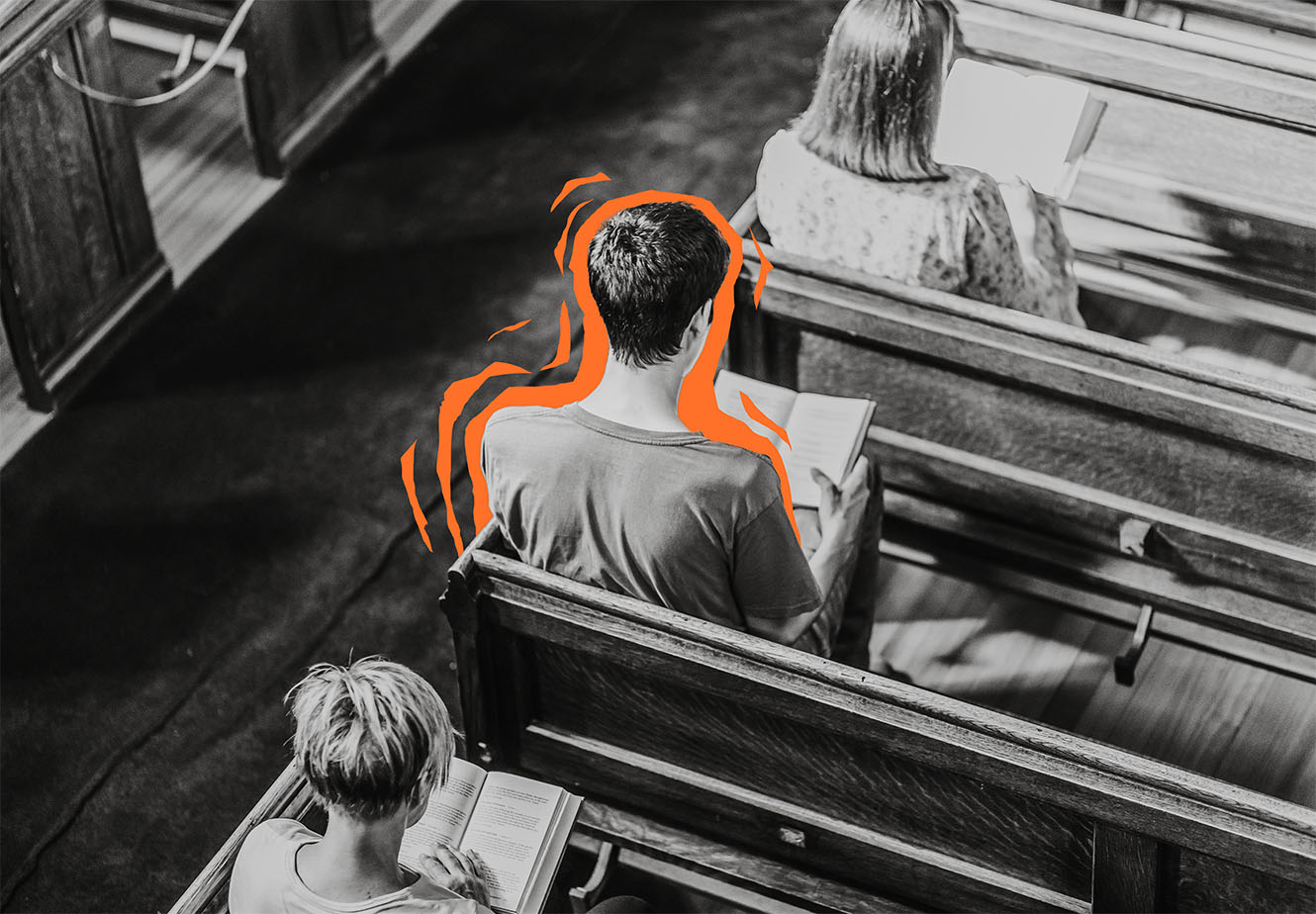
For those of us who are neurotypical, going to church on a Sunday may present the usual challenges: getting there on time, the lack of desire to go, not liking the music or liturgy that week, having to sit somewhere different because someone is in our normal seat, etc. For the neurodivergent person who experiences those same challenges, they are navigating a mental jungle-gym as they attempt to respond in a “normal” manner to these kinds of variances, which non-ND people take in their stride. This is where a little understanding of what a person who has ADHD, ASD, or another neurodivergence will go a long way.
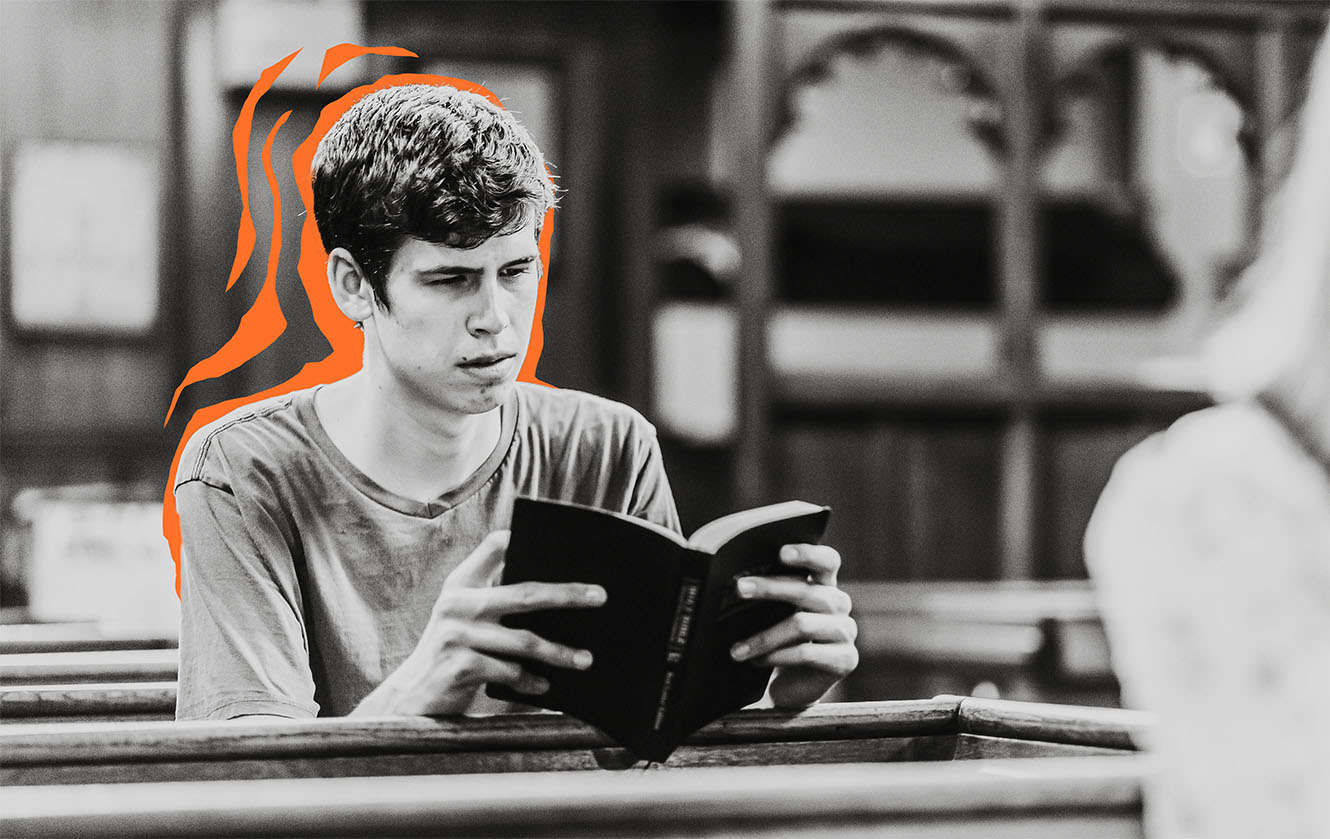
I asked four people I know who are neurodivergent some questions to help those of us who aren’t ND to grasp a little bit of what it might be like for a ND person to be at church week after week. I also hope this helps ND people feel less alone in their church whānau.
David is 18 and has Autism Spectrum Disorder and Anxiety.
Oli is 31 and has ADHD.
William is 14 and has ADHD and Sensory Processing Disorder (SPD).
Faith is 23 and has ADHD and Autism Spectrum Disorder.
D: For me it’s the community at church, especially youth group.
O: I love gathering with God’s people to hear his Word, sing his praises, and share his supper together!
W: The sermons.
F: It’s a safe judgement-free environment where I don’t have to mask or be anxious about how I am. It’s not loud or over stimulating. I know what is going to happen in a service and if there is anything that could potentially make church and that Sunday difficult my minister will let me know so I can mentally and emotionally prepare.
It’s also very Bible-based, and the Scriptures directly relate to what we are talking about. When the preacher starts with an outline of what to expect with different bullet points clearly explained directly related to the text it means I know what’s coming and I don’t have to try and guess. Having so much based on the Bible means the message is clear cut and I can understand what’s happening.
Neurodivergent people love going to church for the same reasons as the neurotypical! It’s biblical that we meet to spur one another on in our faith (Heb 10:24-35), and hear the Word taught.
D: I am loyal and intelligent. I am a sponge of information.
O: I’m not sure there are any strengths involved with an attention deficit, but it does keep me aware of my limits and makes it super clear when I’m not trying to listen.
W: Intelligence.
F: Despite being ND and struggling with social settings I find I can talk to almost anyone. And I am quite good at getting things done when they need to be done (e.g. producing written content for church). I’m quite creative so I find that I am able to channel that when needed. I also understand and recognise other ND individuals and when they are struggling or needing help. So we are able to support each other.
Neurodivergent people are often highly intelligent and have a wealth of knowledge on particular subjects. They often are aware of people “like” them and are able to engage with other ND people well.
D: I get stressed and anxious around unknown things and situations, especially around social interactions with strangers. I struggle when I am given a lot of tasks to do all at once.
O: I have a real difficulty paying attention when people are talking, and threading together complex ideas.
W: Listening.
F: I don’t like busy settings, loud environments, or changes to routine. I get very very anxious which can make coming to church quite difficult. I often get up during the service as I can’t sit still. So I need to move around, fidget etc.
We all have weaknesses, no matter our neurodiversity. It’s interesting to see the common themes here of anxiety with unknown social situations, change, and difficulty in paying attention or listening.
D: I struggle with social interactions with people I don’t know well. I like going to services where I know people.
O: Absolutely, church is full of meaningful interactions which I find very easy to miss. But for me it’s pretty clear when I’m being lazy and letting things go awry, and when I’m using my faculties as I should be.
W: It is difficult to actively listen to the sermon.
F: I have been to a few churches since becoming Christian at 17, and I find loud, bright, and other over stimulating things nervewracking. My current church is the only church I’ve felt fully comfortable to be myself and embrace my quirks and weaknesses. I don’t like overly “emotional” environments, e.g. changing to low lighting, the music team strumming on the guitar while praying.
Neurodivergent people are well aware of their weaknesses – perhaps more than the neurotypical person. They find church difficult for some of the same reasons they enjoy going in the first place: being with people and hearing the Word taught!
D: I enjoy learning more about the Bible and discussing that knowledge with friends.
O: I don’t think so, for me the joy is when I am actively engaged in church life. I think it is definitely true that ADHD shows me I am part of a fallen world, and that alone I have no way of having a relationship with God. In that sense, it does point me to Jesus, and he is the ultimate source of joy!
W: It is easy to understand what is being taught (mostly).
F: I can connect well with lots of different people, and enjoy seeing my work being used (the written content), even though a lot of the time people don’t know that I do that. With fidgeting and walking around a lot I get to sit with lots of different people.
Because neurodivergent people are often highly intelligent, hearing the word taught makes church a joy. Turning up and being engaged in church life is important.
D’s Mum: As a mother of a neurodivergent child I think one of the things that is helpful for David is the predictability of how the service is set out. It is also helpful for David to be made aware if there are going to be any major changes to a service, like a fire drill during this service.
O: I would just want them to see me as their brother in Christ. We all – whether circumstantially, physically, or mentally – have tough things we bring to church with us. I wouldn’t want them thinking that we were somehow totally different!
W: I listen while doing something else – it might look like I’m not paying attention but I am still taking in everything. This might be doodling in my journal or squeezing a squishy toy.
F: If I’m having a bad day, or I shut down, it’s not because of them. It’s simply that I am outside of my window of tolerance and can’t take any more. And if you can see I have shut down or am struggling and I am doing that around you, it means I’m comfortable with you and don’t need to “mask” my way through. This truly shows a church family.
Neurodivergent people might not look or behave in the way neurotypical people would expect in church, but they are still taking everything in.
Being in an Anglican church can have some real advantages for the neurodivergent person, who often likes predictability, set patterns of worship, responses held in common and more traditional song patterns. As a denomination that has historically valued preaching to heads and hearts, having a logical flow is also helpful to the neurodivergent person, whereas abstract ideas and informal worship can create anxiety.
Some simple things such as the service leader and preacher outlining where they are “going”, having a sermon outline and/or notes, and creating a culture where there is less sensory stimulation could be greatly beneficial for the neurodivergent person in your church.
In terms of the social aspect of gathering on a Sunday, can we see someone who is on the edge? Why not approach them, or look for someone who knows that person to introduce you. If you sense they’re up for it, invite them into a pre-existing conversation. Often Neurodivergent people have deep insights, but really struggle to initiate conversation.
So God created mankind in his own image, in the image of God he created them; male and female he created them.
Genesis 1:27
For you created my inmost being; you knit me together in my mother’s womb. I praise you because I am fearfully and wonderfully made; your works are wonderful, I know that full well.
Psalm 139:14
It is no mistake that some of us are neurotypical and some are neurodivergent. God created us that way in our mother’s womb, and we can praise him because of it.
I hope that as you read this article and reflect on the truth of the Scriptures, whether you are neurotypical or neurodivergent, you will be able to go to church this Sunday a little bit more aware of the people in the pews next to you, and how you can love and care for them as your brother or sister in Christ.
Helpful resources:
1 Centre for Christian Living podcast
2 "143: Neurodivergence and the Christian life (Part 1)", Centre for Christian Living, 00:55:11.
Check out other articles in the
series below.
More articles in the
series are to come.
We have invited these writers to share their experiences, ideas and opinions in the hope that these will provoke thought, challenge you to go deeper and inspire you to put your faith into action. These articles should not be taken as the official view of the Nelson Diocese on any particular matter.
For anyone under the age of 50, neurodivergence is probably a familiar term. For those under the age of 20, it’s a term you’ve probably grown up with. But for those over the age of 50 it's likely unfamiliar unless you’re in a medical profession or education.
Neurodivergence (ND) comes in many forms: autism (Autism Spectrum Disorder - ASD), attention deficit/hyperactivity disorder (ADHD), dyslexia, dysgraphia, obsessive compulsive disorder (OCD), to name a few.
People who are neurodivergent have their strengths and weaknesses, just as neurotypical people do, however we live in a society that is largely geared towards the neurotypical and so many neurodivergent people have learned to conform or “mask” in order to fit the expectations of our society. Have you ever had to pretend you’re something you’re not to try to fit in? It’s exhausting!
In August this year, the Centre for Christian Living in Sydney published an excellent three-part podcast called “Neurodivergence and the Christian Life”.1 Over three episodes, they explore neurodivergence, consider what the Bible has to say about it, and what it means for our Christian life and experience.
Talking about models in which neurodivergence has been viewed historically, one of their guests notes that the model that is missing is the biblical and theological model. Kate Morris says, “What we actually need is a world that approaches everyone in the 1 Corinthians 12 sense of us humans being created by God. Christians are one in the body of Christ with all of our differences, and we are called to love and serve each other in this interdependent relationship where, together, we're dependent on Christ for salvation, on God, for grace, on the Holy Spirit for renewal, maturity, and together working to glorify God.”2
For those of us who are neurotypical, going to church on a Sunday may present the usual challenges: getting there on time, the lack of desire to go, not liking the music or liturgy that week, having to sit somewhere different because someone is in our normal seat, etc. For the neurodivergent person who experiences those same challenges, they are navigating a mental jungle-gym as they attempt to respond in a “normal” manner to these kinds of variances, which non-ND people take in their stride. This is where a little understanding of what a person who has ADHD, ASD, or another neurodivergence will go a long way.
I asked four people I know who are neurodivergent some questions to help those of us who aren’t ND to grasp a little bit of what it might be like for a ND person to be at church week after week. I also hope this helps ND people feel less alone in their church whānau.
David is 18 and has Autism Spectrum Disorder and Anxiety.
Oli is 31 and has ADHD.
William is 14 and has ADHD and Sensory Processing Disorder (SPD).
Faith is 23 and has ADHD and Autism Spectrum Disorder.
D: For me it’s the community at church, especially youth group.
O: I love gathering with God’s people to hear his Word, sing his praises, and share his supper together!
W: The sermons.
F: It’s a safe judgement-free environment where I don’t have to mask or be anxious about how I am. It’s not loud or over stimulating. I know what is going to happen in a service and if there is anything that could potentially make church and that Sunday difficult my minister will let me know so I can mentally and emotionally prepare.
It’s also very Bible-based, and the Scriptures directly relate to what we are talking about. When the preacher starts with an outline of what to expect with different bullet points clearly explained directly related to the text it means I know what’s coming and I don’t have to try and guess. Having so much based on the Bible means the message is clear cut and I can understand what’s happening.
Neurodivergent people love going to church for the same reasons as the neurotypical! It’s biblical that we meet to spur one another on in our faith (Heb 10:24-35), and hear the Word taught.
D: I am loyal and intelligent. I am a sponge of information.
O: I’m not sure there are any strengths involved with an attention deficit, but it does keep me aware of my limits and makes it super clear when I’m not trying to listen.
W: Intelligence.
F: Despite being ND and struggling with social settings I find I can talk to almost anyone. And I am quite good at getting things done when they need to be done (e.g. producing written content for church). I’m quite creative so I find that I am able to channel that when needed. I also understand and recognise other ND individuals and when they are struggling or needing help. So we are able to support each other.
Neurodivergent people are often highly intelligent and have a wealth of knowledge on particular subjects. They often are aware of people “like” them and are able to engage with other ND people well.
D: I get stressed and anxious around unknown things and situations, especially around social interactions with strangers. I struggle when I am given a lot of tasks to do all at once.
O: I have a real difficulty paying attention when people are talking, and threading together complex ideas.
W: Listening.
F: I don’t like busy settings, loud environments, or changes to routine. I get very very anxious which can make coming to church quite difficult. I often get up during the service as I can’t sit still. So I need to move around, fidget etc.
We all have weaknesses, no matter our neurodiversity. It’s interesting to see the common themes here of anxiety with unknown social situations, change, and difficulty in paying attention or listening.
D: I struggle with social interactions with people I don’t know well. I like going to services where I know people.
O: Absolutely, church is full of meaningful interactions which I find very easy to miss. But for me it’s pretty clear when I’m being lazy and letting things go awry, and when I’m using my faculties as I should be.
W: It is difficult to actively listen to the sermon.
F: I have been to a few churches since becoming Christian at 17, and I find loud, bright, and other over stimulating things nervewracking. My current church is the only church I’ve felt fully comfortable to be myself and embrace my quirks and weaknesses. I don’t like overly “emotional” environments, e.g. changing to low lighting, the music team strumming on the guitar while praying.
Neurodivergent people are well aware of their weaknesses – perhaps more than the neurotypical person. They find church difficult for some of the same reasons they enjoy going in the first place: being with people and hearing the Word taught!
D: I enjoy learning more about the Bible and discussing that knowledge with friends.
O: I don’t think so, for me the joy is when I am actively engaged in church life. I think it is definitely true that ADHD shows me I am part of a fallen world, and that alone I have no way of having a relationship with God. In that sense, it does point me to Jesus, and he is the ultimate source of joy!
W: It is easy to understand what is being taught (mostly).
F: I can connect well with lots of different people, and enjoy seeing my work being used (the written content), even though a lot of the time people don’t know that I do that. With fidgeting and walking around a lot I get to sit with lots of different people.
Because neurodivergent people are often highly intelligent, hearing the word taught makes church a joy. Turning up and being engaged in church life is important.
D’s Mum: As a mother of a neurodivergent child I think one of the things that is helpful for David is the predictability of how the service is set out. It is also helpful for David to be made aware if there are going to be any major changes to a service, like a fire drill during this service.
O: I would just want them to see me as their brother in Christ. We all – whether circumstantially, physically, or mentally – have tough things we bring to church with us. I wouldn’t want them thinking that we were somehow totally different!
W: I listen while doing something else – it might look like I’m not paying attention but I am still taking in everything. This might be doodling in my journal or squeezing a squishy toy.
F: If I’m having a bad day, or I shut down, it’s not because of them. It’s simply that I am outside of my window of tolerance and can’t take any more. And if you can see I have shut down or am struggling and I am doing that around you, it means I’m comfortable with you and don’t need to “mask” my way through. This truly shows a church family.
Neurodivergent people might not look or behave in the way neurotypical people would expect in church, but they are still taking everything in.
Being in an Anglican church can have some real advantages for the neurodivergent person, who often likes predictability, set patterns of worship, responses held in common and more traditional song patterns. As a denomination that has historically valued preaching to heads and hearts, having a logical flow is also helpful to the neurodivergent person, whereas abstract ideas and informal worship can create anxiety.
Some simple things such as the service leader and preacher outlining where they are “going”, having a sermon outline and/or notes, and creating a culture where there is less sensory stimulation could be greatly beneficial for the neurodivergent person in your church.
In terms of the social aspect of gathering on a Sunday, can we see someone who is on the edge? Why not approach them, or look for someone who knows that person to introduce you. If you sense they’re up for it, invite them into a pre-existing conversation. Often Neurodivergent people have deep insights, but really struggle to initiate conversation.
So God created mankind in his own image, in the image of God he created them; male and female he created them.
Genesis 1:27
For you created my inmost being; you knit me together in my mother’s womb. I praise you because I am fearfully and wonderfully made; your works are wonderful, I know that full well.
Psalm 139:14
It is no mistake that some of us are neurotypical and some are neurodivergent. God created us that way in our mother’s womb, and we can praise him because of it.
I hope that as you read this article and reflect on the truth of the Scriptures, whether you are neurotypical or neurodivergent, you will be able to go to church this Sunday a little bit more aware of the people in the pews next to you, and how you can love and care for them as your brother or sister in Christ.
Helpful resources:
Check out other articles in the
series below.
More articles in the
series are to come.