The story of Ruth invites us to pay attention to the unexpected ways and people through whom God works to bring about his purposes for his people.
In the narrative of Ruth, this takes place both within the book as a literary unit, but is enriched when we have a sense of how to read the story of Ruth as part of the wider biblical narrative.
You might be familiar with the basic outline of Ruth:
Because of a famine in Israel, a man named Elimelech travels from his home in Bethlehem, along with his wife (Naomi) and their two sons (Mahlon and Chilion), to the country of Moab. Elimelech dies, but his two sons then marry Moabite wives, Orpah and Ruth. A decade later, Mahlon and Chilion die. Naomi is left alone with her daughters-in-law, but hears that the famine has eased in Bethlehem, and decides to return to her ancestral land. Orpah stays in Moab, returning to her family and gods, but Ruth refuses to leave Naomi, saying to her,
Do not urge me to leave you or to return from following you. For where you go I will go, and where you lodge I will lodge. Your people shall be my people, and your God my God. Where you die I will die, and there will I be buried.
Ruth 1:16-17
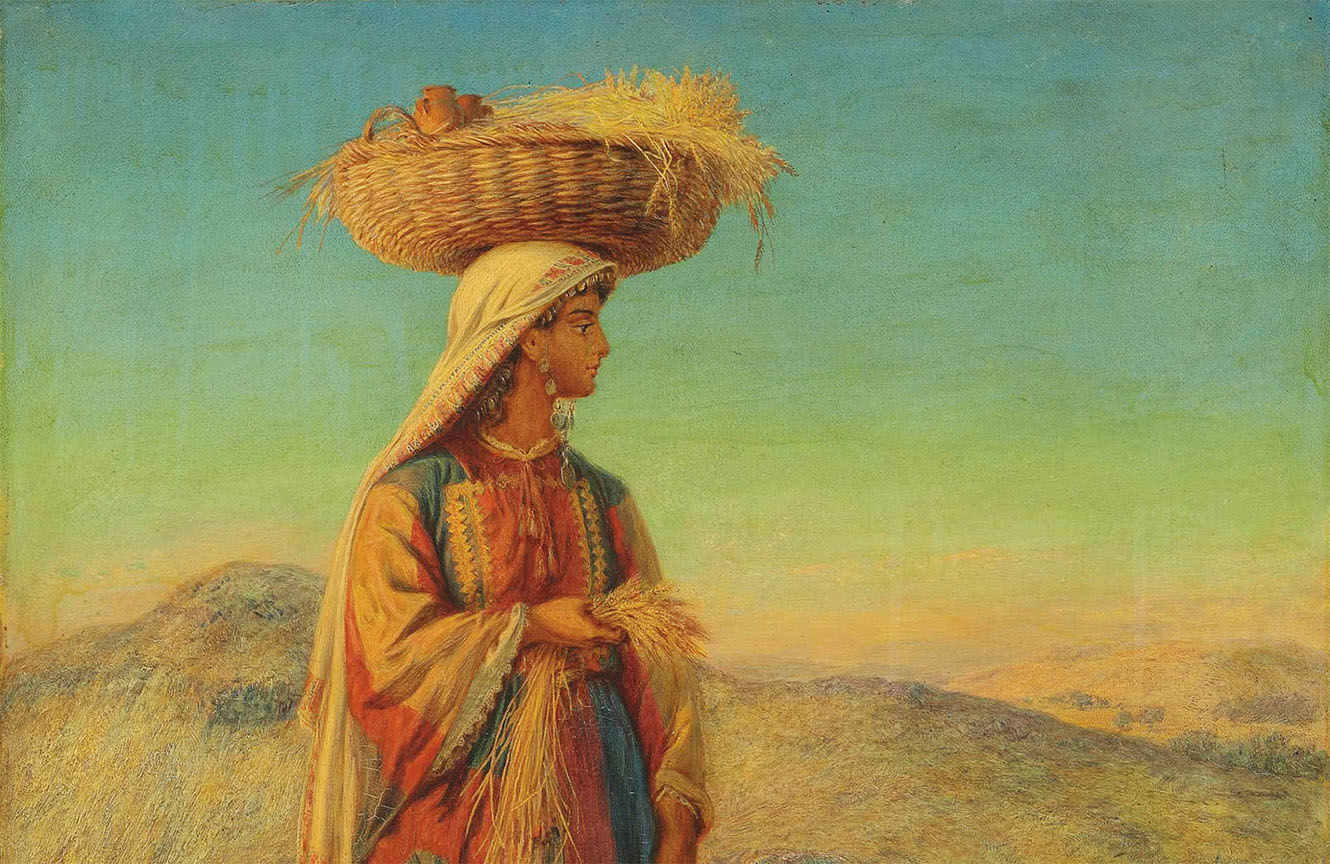
On their return to Bethlehem, Ruth makes use of a provision set out in the Torah, commanding landowners not to go through their fields after the first harvest, but instead to leave the uncollected grapes, wheat or olives for those in need: the stranger, fatherless and the widow.1 Ruth, a stranger and a widow, goes out to glean after the harvesters have passed through the fields.
Without realising it, she gleans on the land of Boaz, one of Elimelech’s relatives. Boaz shows favour to her, and she asks him to protect her through marriage, and eventually they have a son.
In and of itself, reading Ruth is highly encouraging.
It points to God’s care for the outsider and for those in need, God’s faithfulness to his people and God’s sovereignty, ordering the events of human history. But there are some small but not-so-insignificant details that provide really interesting depth to the story – and yet we don’t always notice them.
There are two that I find particularly interesting:
Do you know where to place Ruth’s story in the biblical timeline?
It’s easy to miss the brief opening line, “in the days when the judges ruled”. This time in Israel’s history, coming after Joshua led them into the Promised Land, but before they had a king, was a harsh time of covenantal unfaithfulness, intertribal warfare, and constant oppression by other people groups. Characterised by the refrain, “there was no king in Israel, so the people did what was right in their own eyes”,2 we see Israel struggling to settle into the land, and settle into faithfulness.
In this time of tribal tumult, Ruth’s story shows an alternative way, focusing on peaceful action, trusting in God, and the fruit of faithful obedience.3
Ruth’s genealogy reaches in both directions of the biblical story as well.
The book concludes with Boaz and Ruth marrying and naming their first son Obed, who is then identified as the father of Jesse, the father of King David. Despite being a Moabite and not a member of the people of Israel, Ruth’s choice to align herself with YHWH, to make Naomi’s people and God her own (as we saw above in Ruth 1:16-17), sees her joined to the covenant family. God honours her commitment by weaving her into David’s lineage – as highlighted in Ruth 4:17-22.
For New Testament readers, this is even more significant, for in the first chapter of the New Testament, Ruth is explicitly named in the genealogy of Jesus, the Jewish Messiah, along with several other women whose stories we hear in the Old Testament.
There are many more details and customs that we could dive into, bringing out the ways that Ruth is part of the rich tapestry of God’s redemptive work as told in Scripture. While we don’t have space in this Kōrero article for that, if this sort of work interests you, consider whether you might want to sign up (at the last minute) for the upcoming course I am teaching at Bishopdale College this year. Called “Reading the Bible", on Wednesday nights from 6-9pm, we will work through the narrative of Scripture, doing exactly what we’ve done here: learning how to link the “little stories” to the big story of what God has done.
Classes start next week, so if you’re keen, reach out to me by email: kate@bishopdale.ac.nz.
1 For example: Deuteronomy 24:19-21.
2 Judges 17:6, 18:1, 19:1, 21:25.
3 Katherine Doob Sakenfield, Ruth (Louisville, KY: John Knox Press, 2012), 17-18.
Check out other articles in the
series below.
More articles in the
series are to come.
We have invited these writers to share their experiences, ideas and opinions in the hope that these will provoke thought, challenge you to go deeper and inspire you to put your faith into action. These articles should not be taken as the official view of the Nelson Diocese on any particular matter.
The story of Ruth invites us to pay attention to the unexpected ways and people through whom God works to bring about his purposes for his people.
In the narrative of Ruth, this takes place both within the book as a literary unit, but is enriched when we have a sense of how to read the story of Ruth as part of the wider biblical narrative.
You might be familiar with the basic outline of Ruth:
Because of a famine in Israel, a man named Elimelech travels from his home in Bethlehem, along with his wife (Naomi) and their two sons (Mahlon and Chilion), to the country of Moab. Elimelech dies, but his two sons then marry Moabite wives, Orpah and Ruth. A decade later, Mahlon and Chilion die. Naomi is left alone with her daughters-in-law, but hears that the famine has eased in Bethlehem, and decides to return to her ancestral land. Orpah stays in Moab, returning to her family and gods, but Ruth refuses to leave Naomi, saying to her,
Do not urge me to leave you or to return from following you. For where you go I will go, and where you lodge I will lodge. Your people shall be my people, and your God my God. Where you die I will die, and there will I be buried.
Ruth 1:16-17
On their return to Bethlehem, Ruth makes use of a provision set out in the Torah, commanding landowners not to go through their fields after the first harvest, but instead to leave the uncollected grapes, wheat or olives for those in need: the stranger, fatherless and the widow.1 Ruth, a stranger and a widow, goes out to glean after the harvesters have passed through the fields.
Without realising it, she gleans on the land of Boaz, one of Elimelech’s relatives. Boaz shows favour to her, and she asks him to protect her through marriage, and eventually they have a son.
In and of itself, reading Ruth is highly encouraging.
It points to God’s care for the outsider and for those in need, God’s faithfulness to his people and God’s sovereignty, ordering the events of human history. But there are some small but not-so-insignificant details that provide really interesting depth to the story – and yet we don’t always notice them.
There are two that I find particularly interesting:
Do you know where to place Ruth’s story in the biblical timeline?
It’s easy to miss the brief opening line, “in the days when the judges ruled”. This time in Israel’s history, coming after Joshua led them into the Promised Land, but before they had a king, was a harsh time of covenantal unfaithfulness, intertribal warfare, and constant oppression by other people groups. Characterised by the refrain, “there was no king in Israel, so the people did what was right in their own eyes”,2 we see Israel struggling to settle into the land, and settle into faithfulness.
In this time of tribal tumult, Ruth’s story shows an alternative way, focusing on peaceful action, trusting in God, and the fruit of faithful obedience.3
Ruth’s genealogy reaches in both directions of the biblical story as well.
The book concludes with Boaz and Ruth marrying and naming their first son Obed, who is then identified as the father of Jesse, the father of King David. Despite being a Moabite and not a member of the people of Israel, Ruth’s choice to align herself with YHWH, to make Naomi’s people and God her own (as we saw above in Ruth 1:16-17), sees her joined to the covenant family. God honours her commitment by weaving her into David’s lineage – as highlighted in Ruth 4:17-22.
For New Testament readers, this is even more significant, for in the first chapter of the New Testament, Ruth is explicitly named in the genealogy of Jesus, the Jewish Messiah, along with several other women whose stories we hear in the Old Testament.
There are many more details and customs that we could dive into, bringing out the ways that Ruth is part of the rich tapestry of God’s redemptive work as told in Scripture. While we don’t have space in this Kōrero article for that, if this sort of work interests you, consider whether you might want to sign up (at the last minute) for the upcoming course I am teaching at Bishopdale College this year. Called “Reading the Bible", on Wednesday nights from 6-9pm, we will work through the narrative of Scripture, doing exactly what we’ve done here: learning how to link the “little stories” to the big story of what God has done.
Classes start next week, so if you’re keen, reach out to me by email: kate@bishopdale.ac.nz.
Check out other articles in the
series below.
More articles in the
series are to come.