Every parish has a treasurer. They help manage the “treasure” of the parish: bank accounts, trusts and assets. If you’re like me, these aren’t parts of a church you typically think about. But they’re what keep the lights on during church services, the heaters cranking at youth group over winter, the leaky ceiling repaired in the hall, the fruit and crackers flowing at the preschool group, and any number of other things operating.
It’s the treasurer’s job to ensure money is budgeted for each expense and keep the parish accountable in its transactions. So what does that look like?
Many of the day-to-day duties of a treasurer were relieved in 2006, when the Anglican Centre set up a centralised accounting service to help parishes with managing finance. The team at the Anglican Centre now process transactions, pay wages, prepare GST returns and produce reports – all jobs that, before 2006, were usually done by treasurers on a voluntary basis.
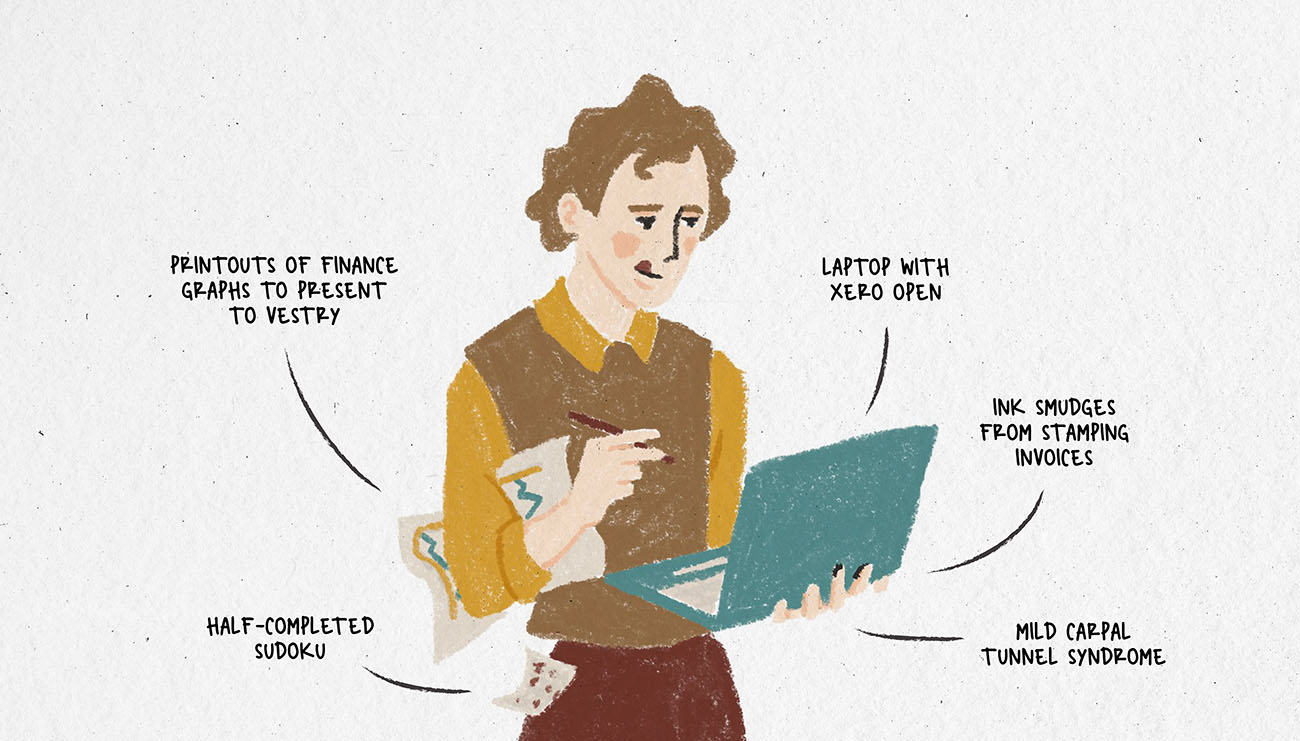
Two major parts of a treasurer’s role are helping to set budgets and presenting reports for vestry to help members understand the finances of the parish. Merryl, treasurer for the Wairau Valley Parish, tells me that a good report will answer these questions:
I love how Māpua treasurer Alison puts it: “The treasurer is the narrator for the numbers.”
The flow of money through a church, she says, is like a river. It’s the job of a treasurer to “sit on the lily pad once in a while, look at the fish and plankton, and report on what they see.” The health of the organisms swimming about reflects the wellbeing of the river.
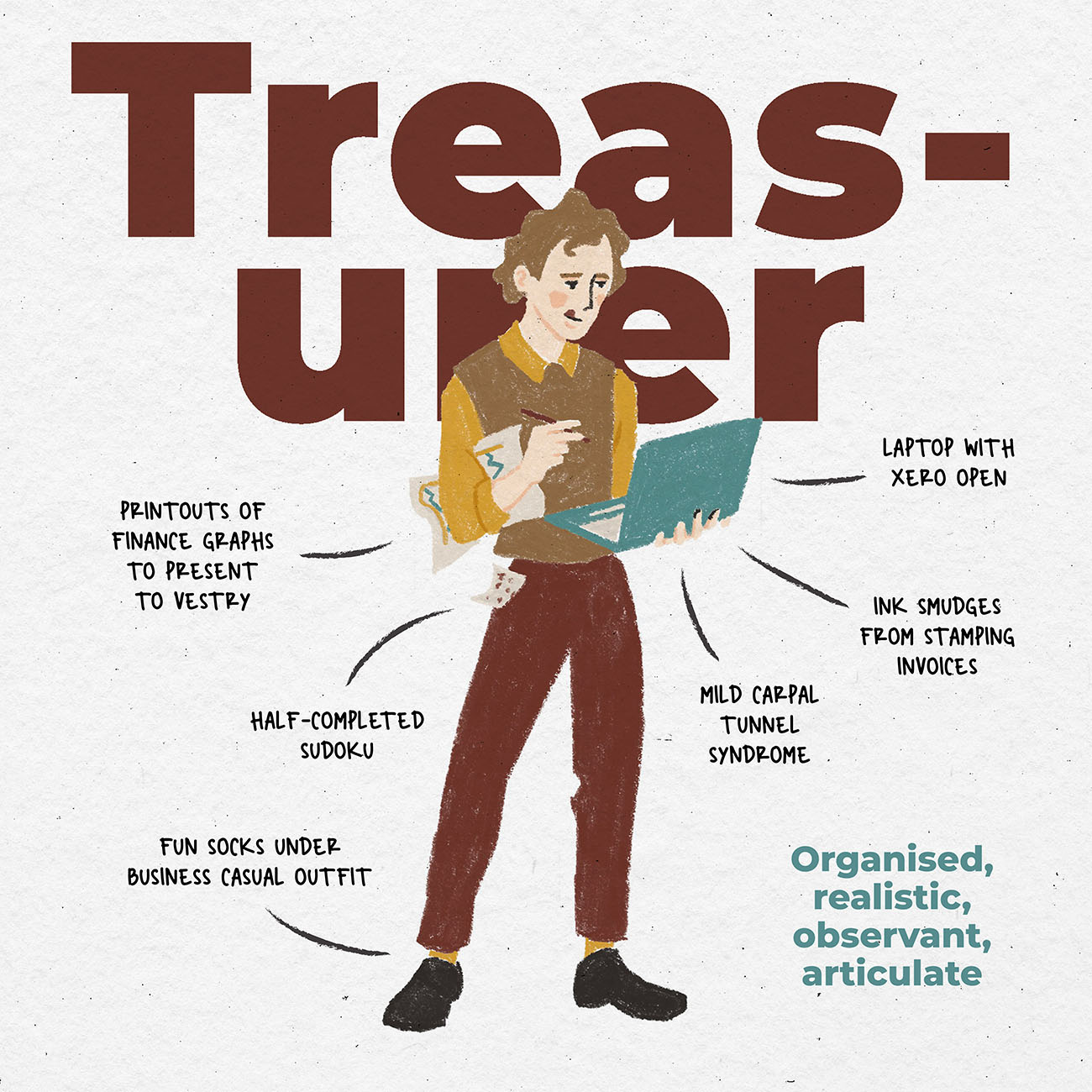
A treasurer, of course, should enjoy working with numbers. Merryl tells me she’s loved balancing the books since her first bookkeeping class at age 12. Even our diocese accountant, Mags, admitted to me that she often plays sudoku during her breaks. (Maybe this shouldn’t surprise me – I often spend my breaks on crosswords or other word games.)
But beyond that, they need to know how to talk about those numbers with those a little less mathematically-adept.
Merryl says the role suits someone who is “organised, computer literate and has good boundaries”. It also helps to have commercial acumen. Stewarding a parish budget is complex and often involves managing trusts and helping maintain 10 year plans for asset upkeep.
In keeping with the theme of anatomy, it seems the treasurer might be the eyes of the body. As Alison said, they must be skilled at inspecting proverbial fish and plankton to ascertain the health of the river – a bird’s eye view (or frog’s eye view) of the state of the parish. And a good treasurer is far-sighted, not just budgeting for today’s needs but looking ahead to the future. Their observations are essential to the financial longevity of the parish.
A treasurer is appointed by vestry – not necessarily at synod or the parish AGM, like some roles, because they don’t serve set terms, but can start or finish up at any time.
It’s a flexible and satisfying job. Merryl says that the work is “so rewarding that the majority stay in the role for many years”.
If you’re interested in volunteering as a treasurer for your parish, talk to the vestry! You might be an answer to prayer.
Check out other articles in the
Anglican Anatomy
series below.
More articles in the
Anglican Anatomy
series are to come.
We have invited these writers to share their experiences, ideas and opinions in the hope that these will provoke thought, challenge you to go deeper and inspire you to put your faith into action. These articles should not be taken as the official view of the Nelson Diocese on any particular matter.
Every parish has a treasurer. They help manage the “treasure” of the parish: bank accounts, trusts and assets. If you’re like me, these aren’t parts of a church you typically think about. But they’re what keep the lights on during church services, the heaters cranking at youth group over winter, the leaky ceiling repaired in the hall, the fruit and crackers flowing at the preschool group, and any number of other things operating.
It’s the treasurer’s job to ensure money is budgeted for each expense and keep the parish accountable in its transactions. So what does that look like?
Many of the day-to-day duties of a treasurer were relieved in 2006, when the Anglican Centre set up a centralised accounting service to help parishes with managing finance. The team at the Anglican Centre now process transactions, pay wages, prepare GST returns and produce reports – all jobs that, before 2006, were usually done by treasurers on a voluntary basis.
Two major parts of a treasurer’s role are helping to set budgets and presenting reports for vestry to help members understand the finances of the parish. Merryl, treasurer for the Wairau Valley Parish, tells me that a good report will answer these questions:
I love how Māpua treasurer Alison puts it: “The treasurer is the narrator for the numbers.”
The flow of money through a church, she says, is like a river. It’s the job of a treasurer to “sit on the lily pad once in a while, look at the fish and plankton, and report on what they see.” The health of the organisms swimming about reflects the wellbeing of the river.
A treasurer, of course, should enjoy working with numbers. Merryl tells me she’s loved balancing the books since her first bookkeeping class at age 12. Even our diocese accountant, Mags, admitted to me that she often plays sudoku during her breaks. (Maybe this shouldn’t surprise me – I often spend my breaks on crosswords or other word games.)
But beyond that, they need to know how to talk about those numbers with those a little less mathematically-adept.
Merryl says the role suits someone who is “organised, computer literate and has good boundaries”. It also helps to have commercial acumen. Stewarding a parish budget is complex and often involves managing trusts and helping maintain 10 year plans for asset upkeep.
In keeping with the theme of anatomy, it seems the treasurer might be the eyes of the body. As Alison said, they must be skilled at inspecting proverbial fish and plankton to ascertain the health of the river – a bird’s eye view (or frog’s eye view) of the state of the parish. And a good treasurer is far-sighted, not just budgeting for today’s needs but looking ahead to the future. Their observations are essential to the financial longevity of the parish.
A treasurer is appointed by vestry – not necessarily at synod or the parish AGM, like some roles, because they don’t serve set terms, but can start or finish up at any time.
It’s a flexible and satisfying job. Merryl says that the work is “so rewarding that the majority stay in the role for many years”.
If you’re interested in volunteering as a treasurer for your parish, talk to the vestry! You might be an answer to prayer.
Check out other articles in the
Anglican Anatomy
series below.
More articles in the
Anglican Anatomy
series are to come.