How many of you remember William Shatner, Captain Kirk of Starship Enterprise fame?
A few years ago, at the age of 90, he had an opportunity to go into space. Imagine that! Most of us who are fortunate enough to reach that age are knitting, or watching The Chase, or pottering in the garden if we’re lucky – not hurtling off into space.
I found Shatner’s reflection on the experience quite moving, and worth quoting at length:
I went to space, after decades of playing a science-fiction character who was exploring the universe and building connections with many diverse life forms and cultures. I thought I would experience a similar feeling: a feeling of deep connection with the immensity around us, a deep call for endless exploration. A call to indeed boldly go where no one had gone before.
I was absolutely wrong… the strongest feeling, dominating everything else by far, was the deepest grief that I had ever experienced. While I was looking away from Earth, and turned towards the rest of the universe, I didn’t feel connection; I didn’t feel attraction. What I understood, in the clearest possible way, was that we were living on a tiny oasis of life, surrounded by an immensity of death. I didn’t see infinite possibilities of worlds to explore, of adventures to have, or living creatures to connect with. I saw the deepest darkness I could have ever imagined, contrasting starkly with the welcoming warmth of our nurturing home planet.
This was an immensely powerful awakening for me. It filled me with sadness. I realised that we had spent decades, if not centuries, being obsessed with looking away, with looking outside. I played my part in popularising the idea that space was the final frontier. But I had to get to space to understand that Earth is, and will remain, our only home. And that we have been ravaging it, relentlessly, making it uninhabitable.1
Deep grief is what William Shatner experienced up there in space. Grief that our gorgeous yet fragile home is becoming more and more inhospitable to life, and that our actions are largely to blame.
I wonder if the grief he felt was similar to the grief Jesus felt upon entering the temple in Jerusalem.
In Matthew chapter 21, Jesus has just rode into Jerusalem on a donkey. He enters the temple and begins to drive out all the people buying and selling animals for sacrifice. “My house shall be called a house of prayer,” he laments, “but you are making it a den of robbers.”
His Father’s house, the temple, was meant to be a holy place, a place of prayer, but it was being profaned.
That begs the question: what is the Father’s house? As beautiful as the temple in Jerusalem was, it was always meant to be a microcosm, a miniature representation of something much larger: the temple of creation itself, with the Holy of Holies corresponding to heaven and the rest of the temple corresponding to earth.
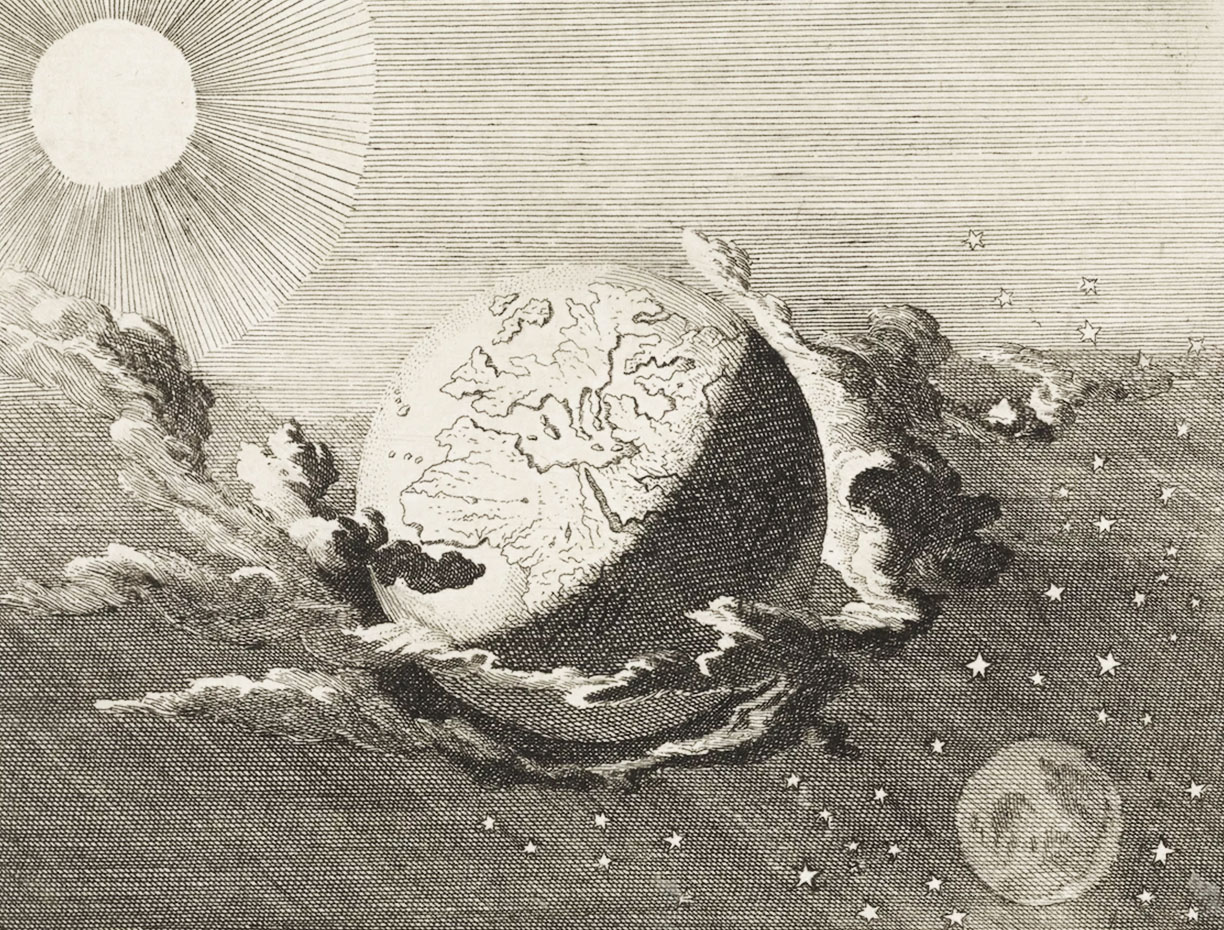
Did you know that the author(s) of Genesis 1 depicts the creation of the heavens and the earth as a building? As a temple, to be more exact. Although our modern ears miss it, the language mirrors the kind of language used to describe the construction of a temple in the ancient near eastern world. And what did temples do? They housed gods. Temple dedication ceremonies in the ancient world lasted seven days. The very point of God’s “rest” on the seventh day in Genesis 1 is that, having constructed the cosmos as his “house”, the divine King then moves in and takes up residence.
You might be thinking, if this is God’s house, why does the world look like such a mess? Look around: Wildfires. Wars. Flooding. Drought. We’re in the midst of the sixth mass extinction episode the earth has ever known. Here in Aotearoa, we’re facing a severe biodiversity crisis, with over 4,000 native species currently threatened or at risk of extinction due to historic habitat loss and invasive pests.
It’s tempting to conclude: if this is God’s home, God isn’t a very good housekeeper. The dishes are stacked sky high. The carpets haven’t been vacuumed in ages. And don’t even look in the bathroom!
Here’s the thing though: in the temple of creation, the task of homemaking is one that humans are meant to fulfil. As mentioned, Genesis 1 mirrors the kind of language used to describe the construction of a temple in the ancient near eastern world. But there’s an important way in which Genesis 1 radically subverts this tradition. In the ancient near eastern world, a cult statue of the god was brought into the temple on day six. But, in Genesis 1, there is no physical statue of God brought into the cosmic temple. Instead, on the sixth day, humans are created in the “image of God”. There’s such a strong prohibition in the Old Testament against making images of God in large part because there’s already an image: you and I.
God moves into the temple of his creation in and through us. We’re meant to reflect God’s love and care into all the world, and to reflect creation’s praises back to God. But all too often we’ve been homewreckers instead of homemakers, turning our Father’s house into a den of robbers.
I think if Jesus were here today, he would cleanse the temple again of the robbers. I think he’d take aim at unaccountable tech billionaires and their thirsty, fossil-fuel spewing AI data centers, which are too often located in the poorest of neighbourhoods. I think he’d caution us about bowing down at the altar of an “Artificial Superintelligence” created by Silicon Valley. I think he’d remind us of our human vocation to be divine image bearers here on this earth, the only home we have.
I just caught myself.
I wrote, “if Jesus were here today”. But he is here today.
In you, and me. In the power of the Spirit, let’s resist the temptation to escape to digital nirvanas or to colonise other planets. Let’s remain planted right here on earth, as the embodied creatures we are, in the house of God.
1 William Shatner, "My trip to space made me realise we have only one Earth – it must live long and prosper", The Guardian.
Check out other articles in the
series below.
More articles in the
series are to come.
We have invited these writers to share their experiences, ideas and opinions in the hope that these will provoke thought, challenge you to go deeper and inspire you to put your faith into action. These articles should not be taken as the official view of the Nelson Diocese on any particular matter.
How many of you remember William Shatner, Captain Kirk of Starship Enterprise fame?
A few years ago, at the age of 90, he had an opportunity to go into space. Imagine that! Most of us who are fortunate enough to reach that age are knitting, or watching The Chase, or pottering in the garden if we’re lucky – not hurtling off into space.
I found Shatner’s reflection on the experience quite moving, and worth quoting at length:
I went to space, after decades of playing a science-fiction character who was exploring the universe and building connections with many diverse life forms and cultures. I thought I would experience a similar feeling: a feeling of deep connection with the immensity around us, a deep call for endless exploration. A call to indeed boldly go where no one had gone before.
I was absolutely wrong… the strongest feeling, dominating everything else by far, was the deepest grief that I had ever experienced. While I was looking away from Earth, and turned towards the rest of the universe, I didn’t feel connection; I didn’t feel attraction. What I understood, in the clearest possible way, was that we were living on a tiny oasis of life, surrounded by an immensity of death. I didn’t see infinite possibilities of worlds to explore, of adventures to have, or living creatures to connect with. I saw the deepest darkness I could have ever imagined, contrasting starkly with the welcoming warmth of our nurturing home planet.
This was an immensely powerful awakening for me. It filled me with sadness. I realised that we had spent decades, if not centuries, being obsessed with looking away, with looking outside. I played my part in popularising the idea that space was the final frontier. But I had to get to space to understand that Earth is, and will remain, our only home. And that we have been ravaging it, relentlessly, making it uninhabitable.1
Deep grief is what William Shatner experienced up there in space. Grief that our gorgeous yet fragile home is becoming more and more inhospitable to life, and that our actions are largely to blame.
I wonder if the grief he felt was similar to the grief Jesus felt upon entering the temple in Jerusalem.
In Matthew chapter 21, Jesus has just rode into Jerusalem on a donkey. He enters the temple and begins to drive out all the people buying and selling animals for sacrifice. “My house shall be called a house of prayer,” he laments, “but you are making it a den of robbers.”
His Father’s house, the temple, was meant to be a holy place, a place of prayer, but it was being profaned.
That begs the question: what is the Father’s house? As beautiful as the temple in Jerusalem was, it was always meant to be a microcosm, a miniature representation of something much larger: the temple of creation itself, with the Holy of Holies corresponding to heaven and the rest of the temple corresponding to earth.
Did you know that the author(s) of Genesis 1 depicts the creation of the heavens and the earth as a building? As a temple, to be more exact. Although our modern ears miss it, the language mirrors the kind of language used to describe the construction of a temple in the ancient near eastern world. And what did temples do? They housed gods. Temple dedication ceremonies in the ancient world lasted seven days. The very point of God’s “rest” on the seventh day in Genesis 1 is that, having constructed the cosmos as his “house”, the divine King then moves in and takes up residence.
You might be thinking, if this is God’s house, why does the world look like such a mess? Look around: Wildfires. Wars. Flooding. Drought. We’re in the midst of the sixth mass extinction episode the earth has ever known. Here in Aotearoa, we’re facing a severe biodiversity crisis, with over 4,000 native species currently threatened or at risk of extinction due to historic habitat loss and invasive pests.
It’s tempting to conclude: if this is God’s home, God isn’t a very good housekeeper. The dishes are stacked sky high. The carpets haven’t been vacuumed in ages. And don’t even look in the bathroom!
Here’s the thing though: in the temple of creation, the task of homemaking is one that humans are meant to fulfil. As mentioned, Genesis 1 mirrors the kind of language used to describe the construction of a temple in the ancient near eastern world. But there’s an important way in which Genesis 1 radically subverts this tradition. In the ancient near eastern world, a cult statue of the god was brought into the temple on day six. But, in Genesis 1, there is no physical statue of God brought into the cosmic temple. Instead, on the sixth day, humans are created in the “image of God”. There’s such a strong prohibition in the Old Testament against making images of God in large part because there’s already an image: you and I.
God moves into the temple of his creation in and through us. We’re meant to reflect God’s love and care into all the world, and to reflect creation’s praises back to God. But all too often we’ve been homewreckers instead of homemakers, turning our Father’s house into a den of robbers.
I think if Jesus were here today, he would cleanse the temple again of the robbers. I think he’d take aim at unaccountable tech billionaires and their thirsty, fossil-fuel spewing AI data centers, which are too often located in the poorest of neighbourhoods. I think he’d caution us about bowing down at the altar of an “Artificial Superintelligence” created by Silicon Valley. I think he’d remind us of our human vocation to be divine image bearers here on this earth, the only home we have.
I just caught myself.
I wrote, “if Jesus were here today”. But he is here today.
In you, and me. In the power of the Spirit, let’s resist the temptation to escape to digital nirvanas or to colonise other planets. Let’s remain planted right here on earth, as the embodied creatures we are, in the house of God.
Check out other articles in the
series below.
More articles in the
series are to come.